
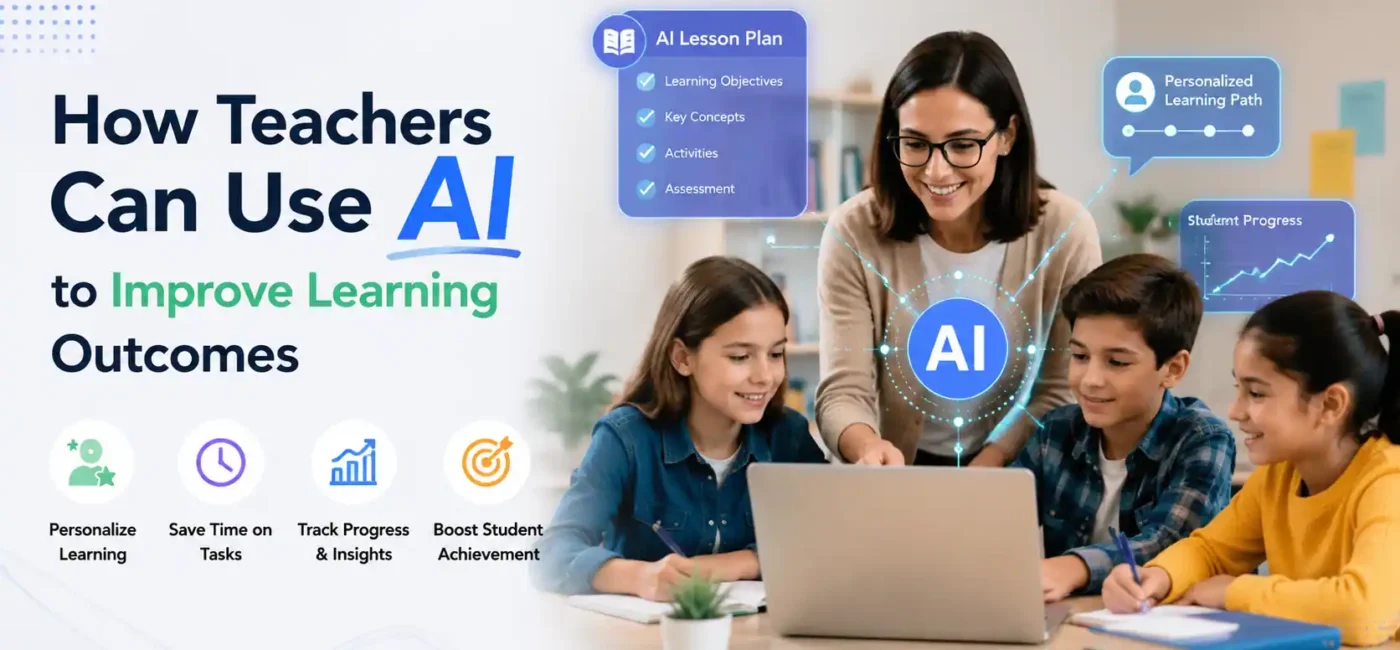
Artificial Intelligence (AI) in education is transforming the global learning ecosystem by improving learning outcomes, student engagement, and teaching efficiency in a powerful and measurable way. In today’s digital education environment, teachers are no longer limited to traditional chalk-and-board methods. Instead, they now have access to advanced AI-powered teaching tools, smart tutoring systems, and automated learning platforms that help optimize classroom performance.
AI in education refers to the use of machine learning algorithms, natural language processing, and predictive analytics to enhance the teaching and learning process. These AI systems analyze student behavior, learning patterns, and academic performance to deliver personalized education experiences. As a result, teachers can focus more on creativity, mentoring, and student interaction while AI handles repetitive academic tasks.
In 2026, AI adoption in classrooms is no longer optional; it is becoming a global standard. Schools and universities are rapidly integrating AI-powered education technology (EdTech) to improve learning outcomes, reduce teacher workload, and enhance student success rates. According to global education technology trends, institutions that implement AI-driven learning systems show significant improvement in student performance and retention rates.
This article explores how teachers can effectively use AI to improve learning outcomes, enhance classroom engagement, and build a future-ready education system.
AI in Education: Understanding Its Impact on Learning Outcomes
Artificial Intelligence is revolutionizing learning outcomes improvement strategies by providing personalized, data-driven educational experiences. In traditional classrooms, one teacher manages multiple students with different learning speeds and abilities. This makes it difficult to provide individualized attention. AI solves this problem by analyzing student performance data and creating customized learning paths.
AI-powered systems use real-time analytics in education to track student progress, identify weak areas, and recommend targeted learning materials. This results in improved understanding and better academic performance. For example, AI-based learning platforms can detect when a student is struggling with mathematics and automatically provide simplified explanations or practice exercises.
The impact of AI on learning outcomes is also supported by educational research. Studies show that AI-assisted learning can significantly improve knowledge retention, critical thinking, and problem-solving skills. This is because AI adapts to each learner’s needs instead of applying a one-size-fits-all teaching approach.
Teachers benefit as well because AI reduces manual workload and allows them to focus on student engagement, classroom interaction, and curriculum development. This combination of human expertise and machine intelligence creates a more effective learning environment.
How Teachers Can Use AI to Improve Classroom Performance
Teachers can use AI in multiple ways to enhance classroom efficiency and learning outcomes optimization. One of the most powerful applications is AI-powered lesson planning. Instead of spending hours designing lesson materials, teachers can use AI tools to instantly generate structured lesson plans based on curriculum requirements.
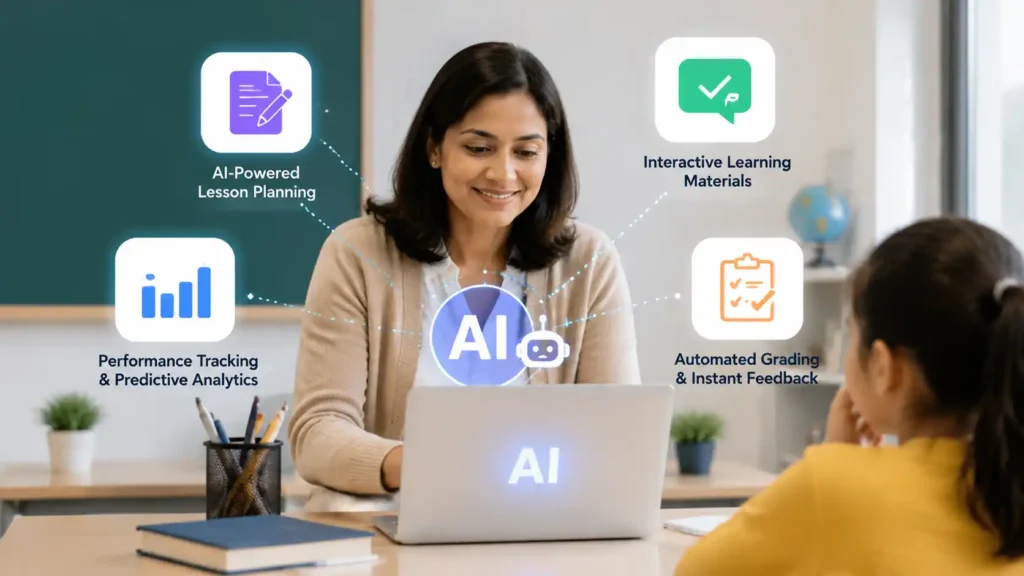
AI tools also help in creating interactive learning materials, including quizzes, flashcards, summaries, and visual explanations. These tools are designed to match different student learning styles, such as visual, auditory, and kinesthetic learning. This increases student engagement and improves overall academic performance.
Another major benefit is automated grading systems, which allow teachers to evaluate assignments, tests, and quizzes quickly and accurately. AI can also provide instant feedback to students, helping them understand mistakes and improve faster. This immediate feedback loop is essential for improving learning outcomes in modern education systems.
Teachers can also use AI for student performance tracking and predictive analytics. AI systems can identify students who are at risk of falling behind and alert teachers early. This enables timely intervention and personalized support, which significantly improves student success rates.
AI Tools That Help Improve Learning Outcomes in Education
The rise of AI education tools and smart learning platforms has made it easier for teachers to integrate technology into classrooms. These tools are designed to simplify teaching, improve engagement, and enhance learning outcomes.
One of the most popular AI tools is the AI chatbot learning assistant, which helps students understand difficult topics by providing step-by-step explanations. These chatbots act as 24/7 virtual tutors, allowing students to learn at their own pace.
Another important category is AI-powered Learning Management Systems (LMS). These platforms use machine learning algorithms to organize content, track student progress, and generate performance reports. Teachers can use these insights to adjust their teaching strategies and improve classroom outcomes.
AI also plays a major role in content generation tools, which help teachers create educational material instantly. From lesson summaries to essay prompts, AI reduces preparation time and increases productivity.
Additionally, AI-driven language learning tools help students improve reading, writing, and communication skills through real-time correction and suggestions. These tools are especially useful in multilingual classrooms where students have different language backgrounds.
Top AI Tools Teachers Can Use to Improve Learning Outcomes
In modern AI-powered education systems, teachers are no longer limited to traditional teaching methods. A wide range of AI tools for teachers are now available that help improve learning outcomes, student engagement, classroom productivity, and academic performance. These tools use machine learning, natural language processing, and automation to support educators in both teaching and administrative tasks.
By integrating the right AI tools, teachers can save time, reduce workload, and deliver more personalized learning experiences. Below are some of the most effective and widely used AI teaching tools in 2026 that are transforming global education systems.
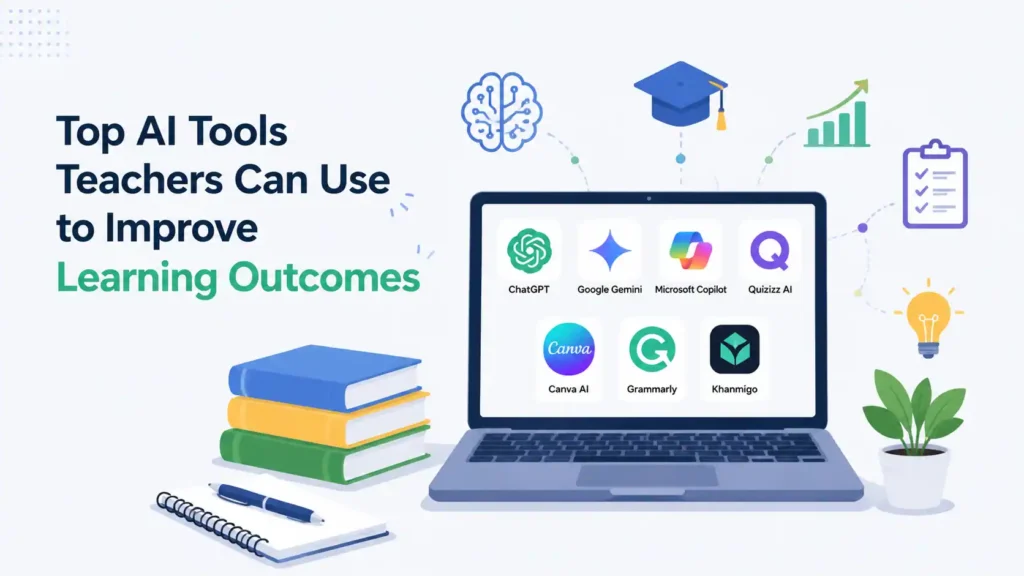
1. ChatGPT – Smart AI Teaching Assistant for Education
ChatGPT is one of the most popular AI tools for teachers and students. It helps educators create lesson plans, exam questions, assignments, summaries, and explanations in seconds. Teachers can also use it to simplify difficult topics and provide easy-to-understand examples for students.
It supports personalized learning support, allowing students to ask questions and receive instant explanations. This improves learning outcomes, comprehension speed, and classroom interaction.
- Best use: Lesson planning, tutoring support, content creation
- SEO keyword: AI teaching assistant tool, AI lesson generator
2. Google Gemini – AI Research and Classroom Support Tool
Google Gemini is a powerful AI learning and research assistant that helps teachers gather accurate educational information quickly. It can generate academic explanations, topic breakdowns, and structured teaching content based on real-time data.
Teachers can use Gemini to build research-based lesson plans and improve subject clarity, making complex topics easier for students to understand.
- Best use: Research-based teaching, academic content support
- SEO keyword: AI research tool for teachers
3. Microsoft Copilot – AI Productivity Tool for Educators
Microsoft Copilot is widely used in education for automating documents, presentations, reports, and spreadsheets. It integrates with Microsoft Office tools and helps teachers create professional lesson slides, grading sheets, and teaching materials quickly.
This tool significantly reduces administrative workload and allows teachers to focus more on student learning improvement and classroom interaction.
- Best use: Presentation creation, grading, documentation
- SEO keyword: AI productivity tools in education
4. Quizizz AI – Automated Quiz and Assessment Generator
Quizizz AI helps teachers create interactive quizzes, tests, and assessments automatically. It uses AI to generate questions based on topic difficulty and subject requirements.
This tool improves student engagement, active learning, and performance evaluation by making classroom assessments more fun and interactive.
- Best use: Student testing, gamified learning
- SEO keyword: AI quiz generator for teachers
5. Canva AI (Magic Write) – Educational Design Tool
Canva AI allows teachers to design visually attractive educational content such as presentations, worksheets, posters, and infographics. Its AI-powered writing feature helps generate educational text and visuals quickly.
This improves student attention, visual learning, and classroom engagement, especially for younger learners.
- Best use: Visual learning content, classroom design
- SEO keyword: AI design tool for education
6. Grammarly AI – Writing Improvement Assistant
Grammarly AI helps improve student writing skills, grammar accuracy, and academic writing quality. Teachers can use it to guide students in essays, assignments, and reports.
It enhances language learning outcomes and writing clarity, making it highly useful for English and communication-based subjects.
- Best use: Writing correction, grammar improvement
- SEO keyword: AI writing assistant for students
7. Khanmigo – AI Personalized Learning Tutor
Khanmigo is an AI-powered tutoring system that provides step-by-step explanations and guided learning support. It helps students learn complex subjects like math, science, and programming at their own pace.
Teachers can use it to support personalized learning paths and improve student understanding levels, especially for weak students.
- Best use: AI tutoring, personalized learning
- SEO keyword: AI tutor for students
AI-Powered Personalized Learning and Student Engagement
Personalized learning is one of the most important contributions of AI in education. AI systems analyze individual student performance and create adaptive learning paths tailored to their strengths and weaknesses. This ensures that each student receives the right level of challenge and support.
For example, a student struggling in science may receive additional visual explanations, while an advanced student may be given more complex problem-solving tasks. This adaptive learning approach improves student engagement, motivation, and academic success rates.
AI also enhances student engagement by introducing gamified learning experiences, where students earn points, badges, or rewards for completing tasks. This makes learning more interactive and enjoyable, increasing participation levels in classrooms.
Teachers can monitor engagement levels through AI dashboards that display real-time data on student activity. This allows educators to identify disengaged students and provide timely support.
Benefits of AI for Teachers and Educational Institutions
AI provides numerous benefits that directly improve both teaching efficiency and learning outcomes. One of the biggest advantages is time efficiency, as AI automates repetitive administrative tasks such as grading, attendance tracking, and report generation.
Another major benefit is data-driven decision-making in education. Teachers can use AI-generated insights to understand student behavior, identify learning gaps, and improve teaching strategies.
AI also supports inclusive education, ensuring that students with different learning abilities receive equal opportunities. For example, AI tools can provide text-to-speech support for visually impaired students or simplified explanations for learners with difficulties.
Educational institutions benefit from AI by improving overall academic performance metrics, reducing dropout rates, and increasing student satisfaction levels. AI also helps schools optimize curriculum design based on performance analytics.
Challenges of Using AI in Education Systems
Despite its advantages, AI in education also presents several challenges that teachers and institutions must address. One major concern is over-reliance on AI tools, which can reduce critical thinking skills if not properly balanced with traditional teaching methods.
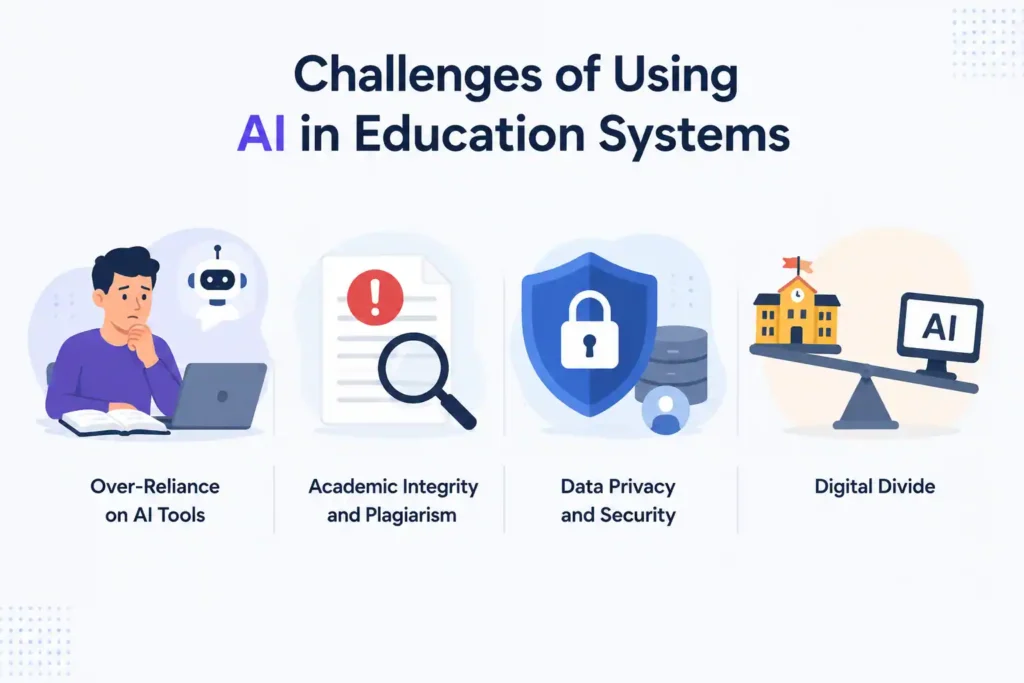
Another challenge is academic integrity and plagiarism, as students may misuse AI tools to complete assignments without genuine learning. Teachers must implement guidelines and monitoring systems to ensure responsible AI usage.
Data privacy is also a major issue in AI-driven education systems. AI platforms collect large amounts of student data, which must be securely stored and ethically managed to protect student privacy.
Additionally, not all schools have equal access to AI technology. This creates a digital divide, where some institutions benefit from advanced AI tools while others struggle with limited resources.
Future of AI in Education and Learning Outcomes Enhancement
The future of AI in education and learning outcomes enhancement is expected to be highly transformative, with deeper integration of machine learning, virtual reality (VR), augmented reality (AR), and intelligent tutoring systems. AI will continue to evolve as a powerful educational technology (EdTech) assistant that enhances both teaching and learning experiences by making education more interactive, adaptive, and student-centered. With the growth of AI-powered classrooms, learning will become more immersive, engaging, and personalized than ever before.
In the coming years, classrooms will likely become more AI-assisted, data-driven, and performance-optimized, where teachers use real-time analytics to adjust their teaching strategies instantly. AI systems will track student learning behavior, engagement levels, and academic progress, allowing educators to identify weak areas early and improve student learning outcomes effectively. AI will also play a key role in developing fully personalized education systems, where every student follows a unique adaptive learning path based on skills, speed, and understanding level.
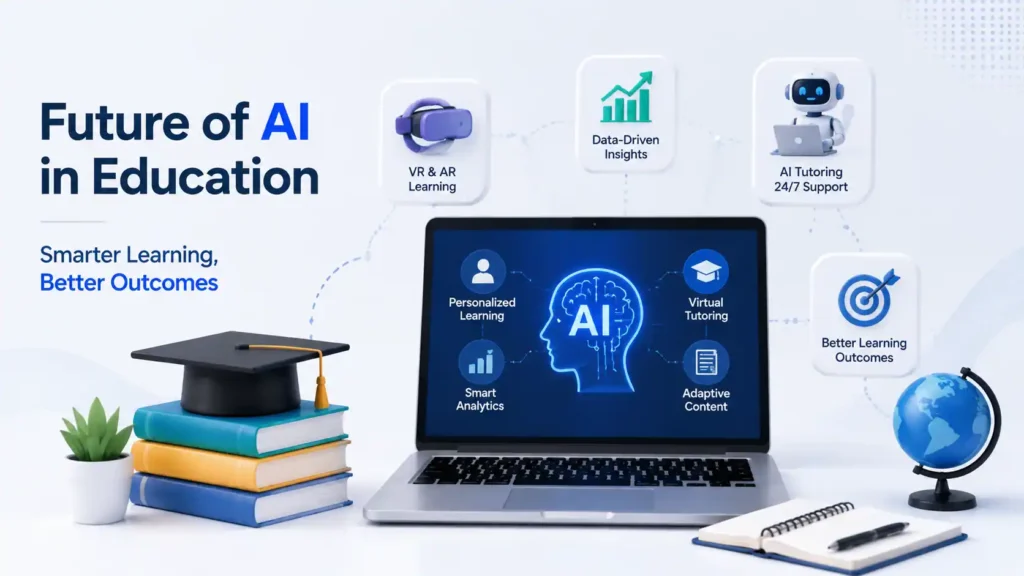
Moreover, AI will introduce advanced tools like predictive learning analytics, smart content recommendation systems, and automated curriculum optimization, which will further enhance teaching quality. Students will benefit from AI-powered virtual tutors and intelligent learning assistants that provide 24/7 support, making education more accessible and efficient across the globe. This will significantly improve knowledge retention, critical thinking skills, and academic performance outcomes.
However, human teachers will always remain essential in the education system. AI cannot replace emotional intelligence, classroom leadership, mentorship, creativity, and human interaction, which are core elements of effective teaching. Instead, AI will act as a powerful support system for teachers, helping them reduce workload, improve lesson delivery, and focus more on student development. The combination of AI in education and human teaching expertise will create a balanced and highly effective learning environment that improves global education quality and long-term learning outcomes.
FAQs
1. How can teachers use AI to improve student learning outcomes effectively?
Teachers can use AI in education to improve student learning outcomes by applying personalized learning systems, AI lesson planning tools, automated grading software, and adaptive learning platforms. AI helps teachers identify weak students through data-driven performance analysis and provides targeted support. By using AI-powered tools like smart tutors and chatbots, teachers can enhance student engagement, academic performance, and knowledge retention. This leads to measurable improvement in overall classroom learning outcomes and student success rates.
2. What are the best AI tools for teachers to improve classroom teaching and learning outcomes?
The best AI tools for teachers include ChatGPT-based teaching assistants, AI Learning Management Systems (LMS), automated quiz generators, AI grading systems, and smart tutoring platforms. These tools help in lesson planning, content creation, student assessment, and real-time feedback generation. Many educators also use AI tools for interactive learning, personalized study plans, and curriculum optimization, which significantly improve student academic performance and classroom productivity.
3. How does AI improve student performance and academic results in schools?
AI improves student performance by delivering adaptive learning experiences, personalized study materials, and real-time academic feedback. It analyzes student data to detect learning gaps and provides customized revision plans, practice exercises, and intelligent tutoring support. This improves exam performance, subject understanding, and long-term knowledge retention. Studies show that AI-based education systems can significantly enhance learning efficiency, student engagement, and overall academic achievement.
4. Is AI safe for students in education and classroom learning environments?
Yes, AI in education is generally safe for students when used with proper guidelines, data privacy protection, and teacher supervision. Educational AI tools are designed to support safe learning environments, content filtering, and responsible usage policies. However, schools must ensure student data protection, ethical AI usage, and controlled access to AI systems. When used correctly, AI becomes a secure and powerful tool for improving learning outcomes and educational quality.
5. Can AI replace teachers in the future or will it only support teaching?
AI cannot replace teachers because teaching requires human emotions, mentorship, communication skills, and classroom management abilities. Instead, AI works as a teaching assistant technology that supports educators by automating tasks like grading, lesson planning, and student performance tracking. The future of education will be a combination of AI-powered teaching systems and human teachers working together to improve student learning outcomes, engagement, and academic success.
6. How does AI help reduce teacher workload and save time in education?
AI reduces teacher workload by automating repetitive tasks such as attendance tracking, assignment grading, report generation, and lesson planning. This allows teachers to focus more on student interaction, classroom engagement, and personalized instruction. By using AI-powered education tools, teachers can save several hours per week, improve productivity, and create more effective learning environments that enhance student performance and learning outcomes.
7. What is the future of AI in education and learning outcome improvement?
The future of AI in education is expected to include fully personalized learning systems, intelligent tutoring platforms, smart classrooms, and predictive learning analytics. AI will continuously improve student learning outcomes, curriculum optimization, and teaching efficiency. Schools and universities will increasingly rely on AI-driven educational technologies to create more interactive, data-driven, and student-centered learning environments that maximize academic success.