
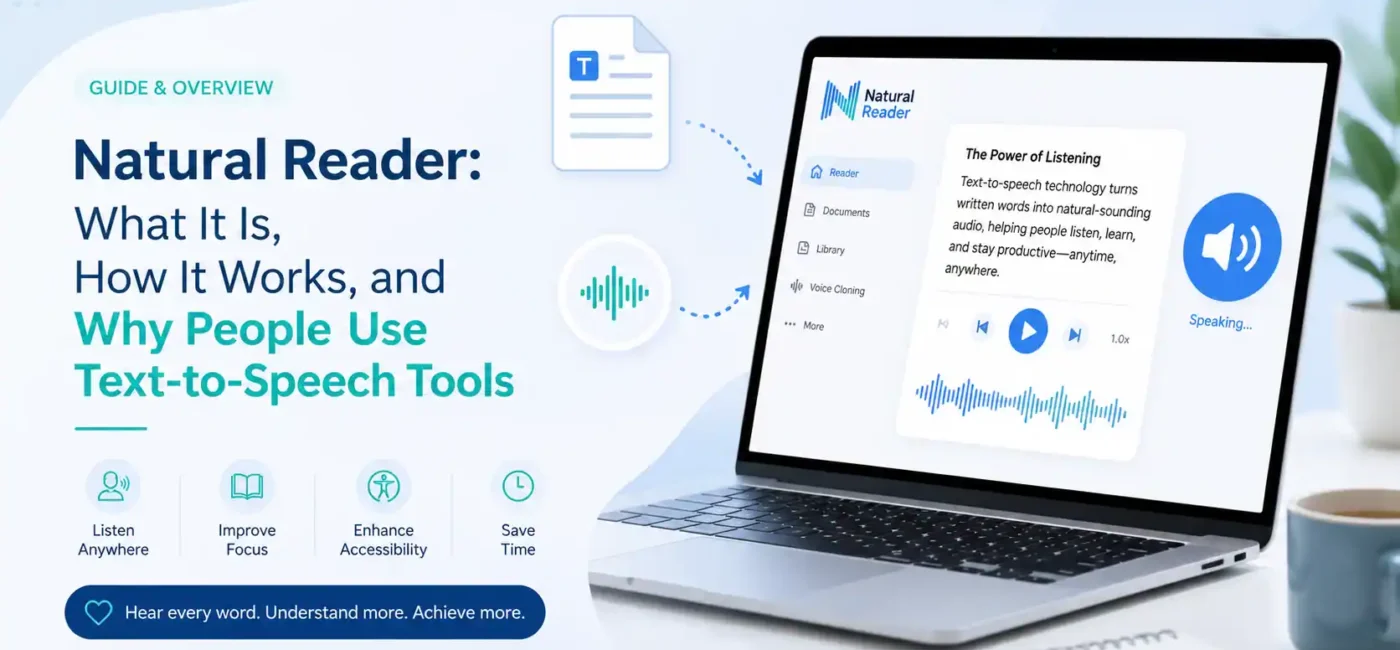
Technology has changed the way people consume digital information. Today, reading long articles, documents, emails, research papers, and online content is not limited to looking at a screen. With the growth of artificial intelligence (AI) and text-to-speech technology, users can convert written words into natural-sounding human voices and listen to content anytime, anywhere.
One of the most popular tools in this category is Natural Reader, an advanced text-to-speech software designed to transform digital text into realistic audio. Whether you are a student trying to study faster, a professional managing large amounts of information, a content creator producing voiceovers, or someone looking for accessibility support, Natural Reader provides a simple solution for turning text into speech.
The increasing demand for AI voice technology has made text-to-speech applications more valuable than ever. People are searching for smarter ways to save time, improve productivity, and consume information efficiently. Instead of spending hours reading documents, users can listen while working, traveling, exercising, or completing daily tasks.
This article explains what Natural Reader is, how Natural Reader works, its main features, benefits, limitations, pricing options, and why millions of users prefer text-to-speech tools in modern digital life.
What Is Natural Reader?
Natural Reader is an AI-powered text-to-speech platform that converts written content into spoken audio. It allows users to upload or paste text from different sources, including documents, webpages, PDFs, emails, and digital books, and then listen to the content through realistic AI-generated voices.
Unlike traditional screen readers that were mainly created for accessibility purposes, modern text-to-speech software like Natural Reader focuses on improving productivity and creating a better reading experience for a wide range of users.
The platform supports various file formats, making it useful for students, researchers, businesses, teachers, and everyday users. Instead of manually reading every word, users can allow the software to read content aloud using different voices, languages, and speaking speeds.
Natural Reader is commonly used for:
- Reading PDFs and documents aloud
- Listening to study materials
- Creating AI voiceovers
- Improving accessibility for people with reading difficulties
- Proofreading written content
- Learning new languages
- Increasing productivity while multitasking
The main idea behind Natural Reader is simple: convert written information into spoken language so people can consume content faster and more comfortably.
How Does Natural Reader Work?
Natural Reader works through advanced text-to-speech (TTS) technology combined with artificial intelligence. The software analyzes written text, identifies words and sentence structures, and converts them into digital speech using AI-generated voices.
The process starts when a user uploads text or selects content to read. The software processes the written information using language-processing algorithms. These algorithms understand pronunciation, punctuation, sentence flow, and context before generating audio output.
Modern AI voice systems are much more advanced than older robotic voices. Earlier text-to-speech programs often sounded unnatural because they produced speech with limited variation. However, AI-based systems can now create voices with improved pronunciation, natural pauses, and human-like expression.
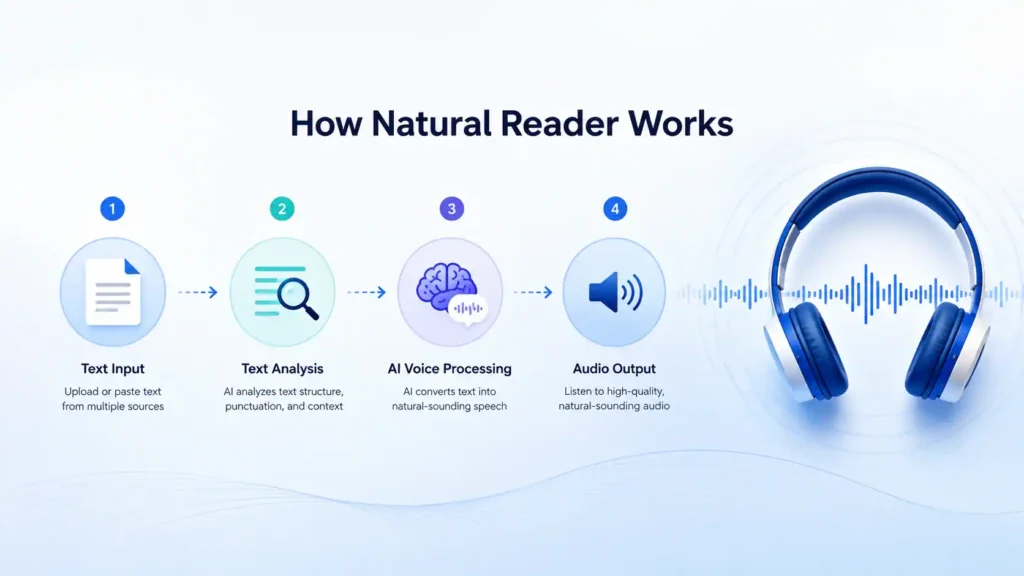
The basic working process of Natural Reader includes:
1. Text Input
Users provide content through different formats, such as PDF files, Microsoft Word documents, webpages, or copied text.
2. Text Analysis
The AI system analyzes the text structure, including words, punctuation marks, numbers, and sentence patterns. This step helps the software understand how the text should sound when spoken.
3. AI Voice Processing
The platform applies speech synthesis technology to convert text into audio. AI models generate a realistic voice based on selected settings, including voice style, language, and reading speed.
4. Audio Output
The final result is a smooth voice reading the original text. Users can listen through headphones, speakers, or connected devices.
This combination of AI and language processing makes Natural Reader one of the widely recognized AI reading assistant tools available today.
Key Features of Natural Reader
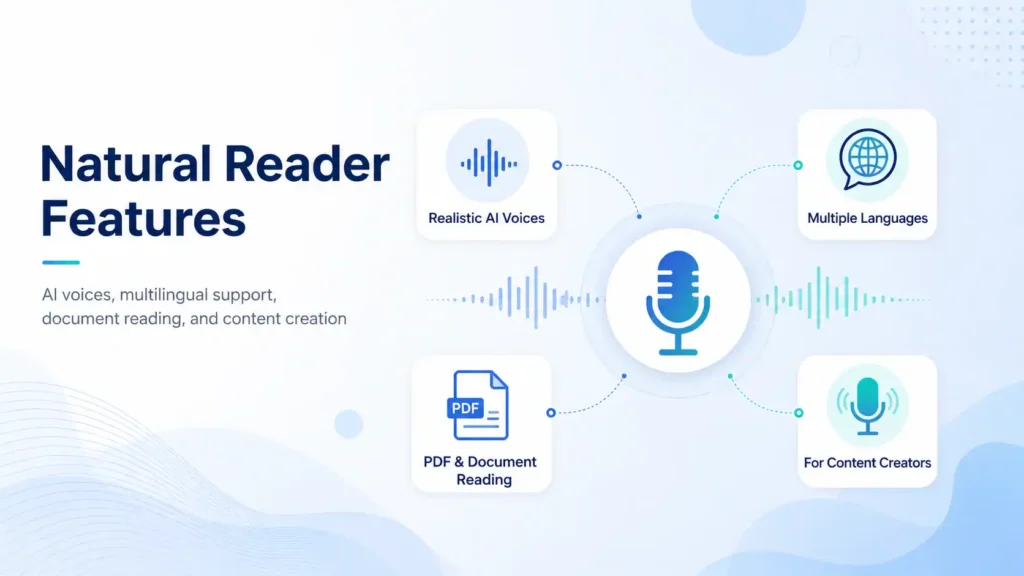
Natural Reader offers several features that make it useful for different types of users. The platform is designed not only for basic reading but also for improving accessibility, productivity, and content creation.
Realistic AI Voices
One of the biggest advantages of Natural Reader is its collection of realistic AI voices. Instead of mechanical-sounding speech, the platform provides voices designed to sound closer to natural human communication.
Users can choose different voice styles depending on their needs. A professional voice may be useful for business presentations, while a slower and clearer voice may help students understand complex learning materials.
The development of realistic AI voices has significantly improved the quality of text-to-speech technology, making audio content more engaging and easier to understand.
Multiple Language Support
Natural Reader supports multiple languages and accents, making it valuable for international users. Language learners can listen to correct pronunciation while studying new vocabulary.
For students learning English or other languages, text-to-speech tools provide an additional method of improving listening skills and understanding sentence structures.
Businesses can also benefit from multilingual voice technology when creating training materials, presentations, and digital content for global audiences.
Document and PDF Reading
Many people struggle with reading long documents because of limited time or screen fatigue. Natural Reader solves this problem by allowing users to listen to documents instead of reading them manually.
The software can read different types of files, including:
- PDF documents
- Word files
- Text files
- Online articles
- E-books
- Digital study materials
For researchers and professionals who handle large amounts of written information, this feature can improve productivity significantly.
AI Voice Generation for Content Creators
Content creation has become one of the fastest-growing areas where AI voice technology is being used. Many creators use text-to-speech tools for videos, presentations, online courses, and marketing content.
Natural Reader can help creators generate voice narration without recording their own voice. This can save time and reduce production costs.
Why Do People Use Natural Reader?
The popularity of Natural Reader comes from the growing need for faster and smarter ways to consume information. People today receive more digital content than ever before, including emails, reports, articles, books, and online courses.
Reading everything manually can be time-consuming. Text-to-speech technology provides an alternative approach by allowing users to listen and learn simultaneously.
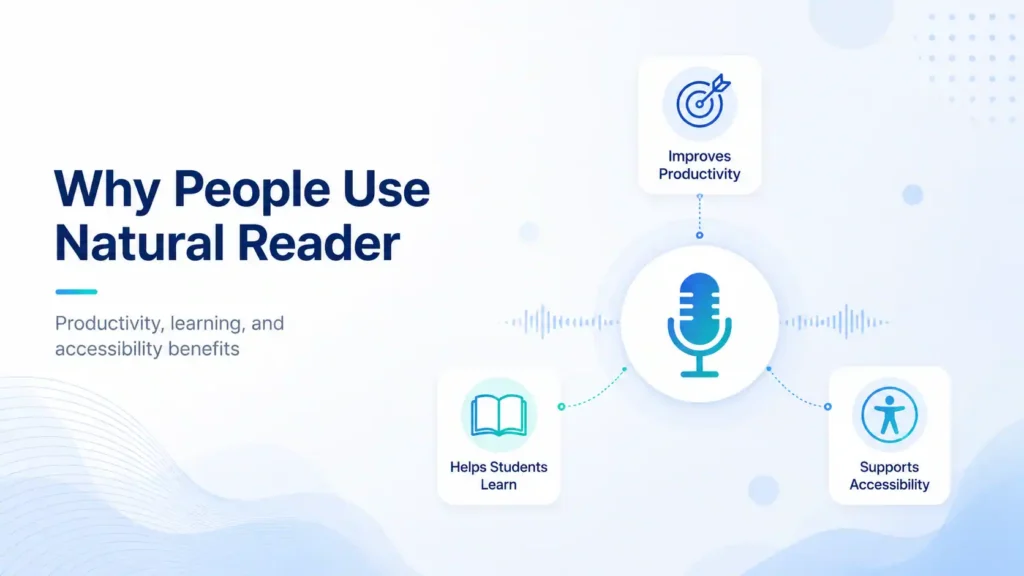
Improves Productivity
One major reason people use Natural Reader is productivity improvement. Many users listen to documents while performing other activities, allowing them to complete multiple tasks at the same time.
For professionals, this means they can review reports during commuting or listen to important information while working on other responsibilities.
The ability to transform written information into audio makes learning and working more flexible.
Helps Students Learn Better
Students often need to study large amounts of information. Reading textbooks, research papers, and notes for many hours can cause tiredness and reduced concentration.
Natural Reader helps students by allowing them to listen to educational materials. This can support different learning styles and make studying more interactive.
Students can use text-to-speech tools for:
- Reviewing notes
- Listening to textbooks
- Improving pronunciation
- Understanding difficult topics
- Preparing presentations
For learners who prefer auditory learning, AI reading tools can become a valuable educational resource.
Supports Accessibility
Accessibility is one of the most important applications of text-to-speech technology. Many people experience difficulties reading digital content because of visual challenges, learning disabilities, or reading fatigue.
Natural Reader provides an easier way to access information by converting text into speech.
For individuals with conditions such as dyslexia or visual impairments, audio-based content can make digital information more accessible.
Technology companies increasingly focus on accessibility because everyone should have equal opportunities to access knowledge and information.
Natural Reader vs Traditional Reading Methods
| Feature | Traditional Reading | Natural Reader Text-to-Speech |
| Speed | Depends on reading ability | Adjustable reading speed |
| Multitasking | Difficult | Easy while doing other activities |
| Accessibility | Limited | Better support for different users |
| Learning Style | Visual-focused | Supports auditory learning |
| Content Consumption | Requires screen time | Allows listening anywhere |
Natural Reader does not completely replace traditional reading. Instead, it provides another option for people who want flexibility and convenience.
Many users combine both methods by reading important sections and listening to longer materials.
Benefits of Using Text-to-Speech Tools Like Natural Reader
The growth of AI-powered reading assistants shows that people are looking for smarter ways to manage information. Natural Reader provides several benefits that make it useful for personal, educational, and professional purposes.
The biggest advantage is convenience. Users can transform almost any written content into audio within seconds. This reduces dependence on screens and makes information easier to access.
Another important benefit is improved focus. Some people find it easier to understand information when they hear it instead of reading silently. Listening can also help maintain concentration during long learning sessions.
Text-to-speech tools also save time. Professionals who need to review large amounts of content can listen instead of spending additional hours reading.
For businesses, AI voice technology creates opportunities for affordable content production. Companies can develop training videos, tutorials, and marketing materials without hiring voice actors for every project.
Natural Reader Pricing and Available Plans
When choosing any text-to-speech software, pricing is an important factor. Natural Reader offers different plans designed for individual users, students, professionals, and businesses. The availability of different packages allows users to select features according to their requirements instead of paying for unnecessary options.
The free version of Natural Reader provides basic access to text-to-speech features, allowing users to experience how the platform converts written content into audio. This option is suitable for people who want simple reading assistance or want to test the software before upgrading.
Premium plans usually provide access to advanced features such as more realistic AI voices, additional languages, higher-quality audio output, and expanded document support. These features are especially useful for users who regularly work with large amounts of written content.
Professional users, educators, and content creators often choose advanced plans because they need better voice quality, commercial usage rights, and additional customization options.
A general comparison of Natural Reader plans can be understood below:
| Plan Type | Best For | Main Features |
| Free Version | Casual users | Basic text reading and limited voices |
| Premium Version | Students and professionals | Advanced AI voices, more features, better reading experience |
| Business Version | Companies and organizations | Commercial usage, team access, professional applications |
The value of Natural Reader depends on how frequently someone uses text-to-speech technology. For occasional users, free features may be enough, while regular users may benefit from premium options.
Pros and Cons of Natural Reader
Like every digital tool, Natural Reader has advantages and limitations. Understanding both sides helps users decide whether it is the right AI text-to-speech tool for their needs.
Advantages of Natural Reader
One of the strongest advantages of Natural Reader is its simple user interface. Users do not need technical knowledge to convert text into speech. The process is straightforward: upload content, choose a voice, adjust settings, and start listening.
Another important benefit is voice quality. Modern AI-generated voices provide a smoother experience compared with older text-to-speech systems that sounded robotic. This improvement makes long listening sessions more comfortable.
Natural Reader is also valuable because it supports different types of users. A student may use it for studying, a business professional may use it for reviewing documents, and a content creator may use it for voice generation.
Key advantages include:
- Easy-to-use interface
- Natural-sounding AI voices
- Support for multiple document formats
- Helpful accessibility features
- Useful for education and professional work
- Saves reading time
- Supports multitasking
The combination of convenience and artificial intelligence makes Natural Reader a practical tool for modern digital users.
Limitations of Natural Reader
Although Natural Reader provides many useful features, it also has some limitations. AI voices have improved significantly, but they may not always perfectly match human emotions, especially when reading creative content such as stories, advertisements, or emotional scripts.
Some advanced features require paid subscriptions, which may not be suitable for users looking for completely free solutions.
Another limitation is that text-to-speech technology depends on accurate text processing. If a document contains unusual formatting, complex symbols, or incorrect text recognition, the generated audio quality may be affected.
Some users may also prefer human-recorded voices for professional projects because human voices can provide deeper emotional expression.
However, for everyday reading, accessibility support, and productivity improvement, Natural Reader remains a powerful solution.
Natural Reader Alternatives: Other Popular Text-to-Speech Tools
The demand for AI voice technology has created many text-to-speech platforms. While Natural Reader is one of the popular choices, several alternatives provide different features for different user requirements.
Speechify is another well-known AI reading assistant that focuses on helping users listen to books, documents, and webpages. It is popular among students and professionals who want faster content consumption.
Speechify provides high-quality AI voices and allows users to adjust reading speed according to their preferences.
Microsoft Immersive Reader is designed mainly for education and accessibility. It helps students improve reading skills by providing tools such as read-aloud features, text spacing options, and learning support.
Google Text-to-Speech technology is widely used across Android devices and various applications. It provides voice generation capabilities for mobile users and developers.
ElevenLabs is known for highly realistic AI voice generation. It is commonly used by content creators, businesses, and developers who need advanced voice cloning and professional-quality audio.
A comparison of different tools:
| Tool | Main Purpose | Best For |
| Natural Reader | Reading documents and accessibility | Students, professionals, everyday users |
| Speechify | Fast listening experience | Learners and productivity users |
| Microsoft Immersive Reader | Educational accessibility | Schools and students |
| Google Text-to-Speech | Mobile voice applications | Android users and developers |
| ElevenLabs | Advanced AI voice creation | Creators and businesses |
The best choice depends on whether someone needs simple reading assistance, professional voice creation, or accessibility support.
How Natural Reader Helps Businesses and Content Creators
The modern digital economy depends heavily on content. Businesses create training materials, marketing videos, online courses, presentations, and customer support resources every day.
Creating professional voice recordings traditionally required expensive equipment, voice actors, and editing skills. AI voice technology has changed this process by making audio production faster and more affordable.
Natural Reader can help businesses create:
- Training videos
- Product demonstrations
- Educational content
- Internal company documents
- Marketing presentations
- Audio versions of written content
For small businesses and startups, AI voice tools reduce production costs while maintaining professional quality.
Content creators can also benefit from text-to-speech technology. Video creators, bloggers, and online educators can convert written scripts into audio without recording manually.
This allows creators to focus more on content strategy, storytelling, and audience engagement.
The Role of AI in the Future of Text-to-Speech Technology
Artificial intelligence is continuously improving the quality of digital voices. Future text-to-speech systems are expected to become even more realistic, emotional, and personalized.
AI models are learning how humans communicate, including tone, pronunciation, pauses, and emotional expressions. This means future AI voices may become almost indistinguishable from human speech in many situations.
The future of text-to-speech technology may include:
- More realistic emotional voices
- Real-time voice translation
- Personalized AI reading assistants
- Better accessibility solutions
- Advanced voice customization
- Integration with smart devices
As digital information continues growing, tools like Natural Reader will become increasingly important. People need faster ways to process information, and AI-powered reading solutions provide a practical answer.
Who Should Use Natural Reader?
Natural Reader is suitable for a wide range of users. It is not limited to one specific group because different people can use it for different purposes.
- Students can use Natural Reader to listen to textbooks, research papers, and study materials.
- Professionals can use it to review reports, emails, and documents while saving time.
- Teachers and educators can use text-to-speech tools to create accessible learning materials.
- Content creators can use AI voices for videos, presentations, and digital products.
- People with reading difficulties can use it as an accessibility solution to make digital content easier to understand.
The flexibility of Natural Reader is one of the main reasons behind its popularity.
FAQs
Q1. What is Natural Reader used for?
Natural Reader is a text-to-speech software used to convert written text into spoken audio. People use it for reading documents, studying, accessibility support, voice generation, and improving productivity.
Q2. Is Natural Reader free?
Yes, Natural Reader offers a free version with basic features. Premium plans provide additional AI voices, advanced features, and more customization options.
Q3. Can Natural Reader read PDF files?
Yes, Natural Reader can read PDF documents along with other file formats. Users can upload documents and listen to the content through AI-generated voices.
Q4. Is Natural Reader useful for students?
Yes, Natural Reader can help students listen to textbooks, notes, and research materials. It supports different learning styles and can make studying more flexible.
Q5. Can Natural Reader create AI voiceovers?
Yes, Natural Reader can be used for AI voice generation and audio creation. It is useful for presentations, educational content, and digital projects.