
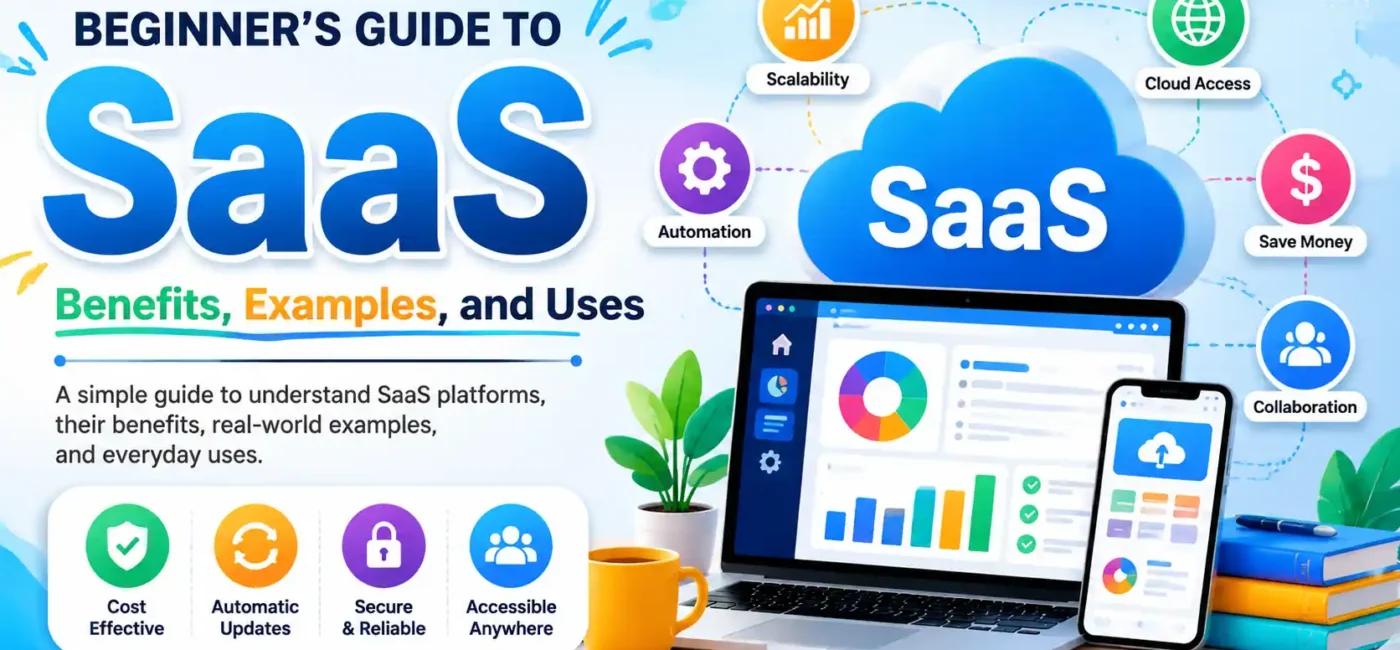
SaaS (Software as a Service) is one of the fastest-growing models in the modern digital economy, and it has completely changed how people use software today. In simple terms, SaaS platforms are cloud-based software solutions that users access directly through the internet without downloading or installing anything on their devices. This means everything runs on remote servers, while users simply log in through a browser or mobile app and start working instantly.
The concept of Software as a Service (SaaS) is built around convenience, scalability, and cost efficiency. Instead of purchasing expensive software licenses and installing heavy programs on computers, users now subscribe to SaaS platforms on a monthly or yearly basis. This shift has made powerful tools accessible to startups, small businesses, freelancers, and even large enterprises.
From Google Workspace and Dropbox to Salesforce and Shopify, SaaS platforms are everywhere in today’s digital ecosystem. They are designed to simplify workflows, reduce IT complexity, and enable global access to software from anywhere in the world. The rise of cloud computing has made SaaS not just a trend but a foundational technology for modern businesses.
SaaS platforms also bring real-time collaboration into everyday work environments, allowing multiple users to edit, share, and manage data simultaneously without version conflicts. This has significantly improved productivity in remote and hybrid work settings, where teams are distributed across different locations. Another key advantage is automatic updates, meaning users always get the latest features, security patches, and performance improvements without manual installation.
Additionally, SaaS solutions offer high scalability, allowing businesses to easily upgrade or downgrade their plans based on demand. Whether it is a small startup testing a new idea or a global enterprise managing thousands of users, SaaS adapts effortlessly. With built-in analytics, integrations, and AI-powered features becoming more common, SaaS is now driving the next wave of digital transformation across industries worldwide.
How SaaS Platforms Work: Inside the Cloud Software System
To understand SaaS platforms deeply, it is important to know how they actually work behind the scenes. SaaS applications run on cloud computing infrastructure, which means the software is hosted on powerful remote servers managed by the provider. When a user accesses a SaaS platform, their device sends a request over the internet to these servers, which process the request and return the result instantly.
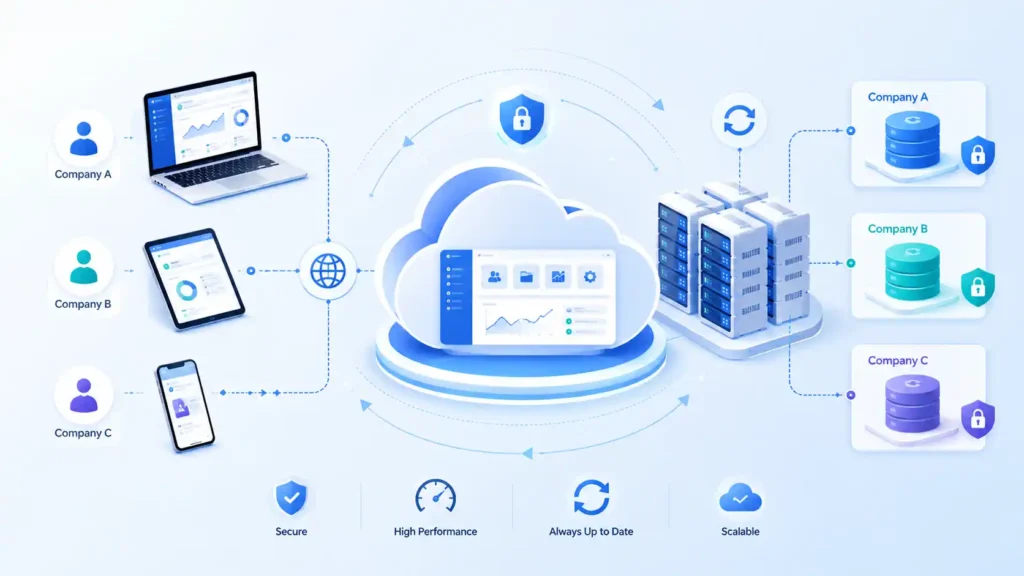
This entire process happens in seconds, making SaaS feel like a local application even though everything is happening in the cloud. The backbone of SaaS architecture is multi-tenant cloud software, which allows multiple users to share the same infrastructure while keeping their data completely separate and secure.
One of the biggest advantages of SaaS platforms is automatic updates. Traditional software requires manual installation of updates, but SaaS systems update themselves in real time. This ensures that every user always has access to the latest version of the software without any effort.
Evolution of SaaS Platforms: From Traditional Software to Cloud Revolution
The evolution of SaaS platforms represents a major transformation in the history of software development. In the early days of computing, software was distributed through physical media such as CDs, DVDs, and USB drives. Users had to install everything manually, and upgrades were expensive, time-consuming, and often complicated.
This traditional software model also required users to purchase permanent licenses, which made advanced tools inaccessible to many small businesses and individuals. On top of that, software compatibility issues and hardware limitations created additional challenges.
With the rise of cloud computing and high-speed internet, the SaaS business model emerged as a revolutionary solution. Instead of installing software locally, companies began hosting applications on centralized servers and offering them as subscription-based services.
This shift gave birth to modern SaaS giants such as Microsoft 365, Salesforce, Zoom, and many others. Today, SaaS is not just an alternative—it is the dominant model for software delivery. Businesses across industries now prefer SaaS platforms because they are flexible, affordable, and easy to scale.
Key Features of SaaS Platforms: Why Cloud Software is So Powerful
Modern SaaS platforms come with a wide range of features that make them highly efficient and user-friendly. One of the most important features is accessibility. SaaS applications can be accessed from any device with an internet connection, making them ideal for remote work and global collaboration.
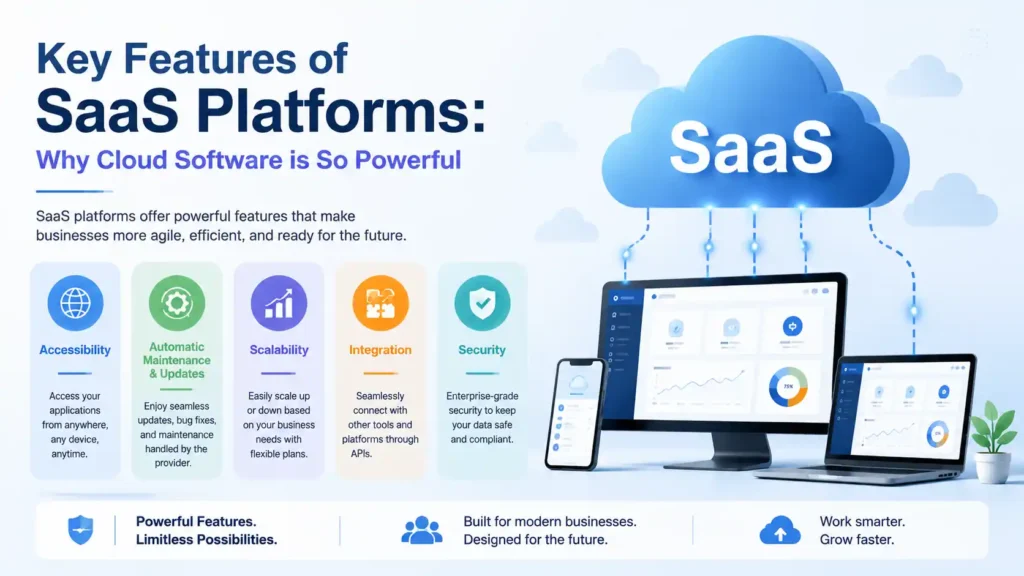
Another powerful feature of SaaS platforms is automatic maintenance and updates. Users do not need to worry about installing patches, fixing bugs, or upgrading versions. Everything is handled automatically by the provider, ensuring smooth performance at all times.
Scalability is another critical feature of SaaS systems. Businesses can easily upgrade or downgrade their subscription plans based on their needs. This flexibility allows companies to grow without worrying about infrastructure limitations.
Integration is also a major advantage of SaaS platforms. Most modern SaaS tools are designed to connect with other software through APIs, allowing seamless data sharing and workflow automation across multiple systems.
These features collectively make SaaS platforms one of the most efficient solutions for modern digital operations.
Benefits of SaaS Platforms for Businesses and Users
The benefits of SaaS platforms extend across individuals, startups, and large enterprises. One of the most significant advantages is cost reduction. Instead of investing in expensive hardware or software licenses, users simply pay a subscription fee, which makes SaaS highly affordable.
Another major benefit is flexibility. SaaS platforms allow users to access their tools from anywhere in the world. Whether you are working from home, traveling, or in the office, you can log in and continue your work without interruption.
SaaS also improves productivity by eliminating technical barriers. Since everything is already set up and maintained by the provider, users can focus entirely on their tasks instead of dealing with installation or maintenance issues.
For businesses, SaaS platforms also reduce the need for large IT teams. Cloud-based systems handle updates, backups, and security automatically, reducing operational costs and increasing efficiency.
Additionally, SaaS supports collaboration by allowing multiple users to work on the same platform in real time. This is especially useful for remote teams and global organizations.
SaaS Pricing Models, Security, and Industry Challenges
The SaaS pricing model is one of the key reasons behind its global popularity. Most SaaS platforms operate on a subscription-based system, where users pay monthly or yearly fees depending on the plan they choose. This predictable pricing structure helps businesses manage budgets more effectively.
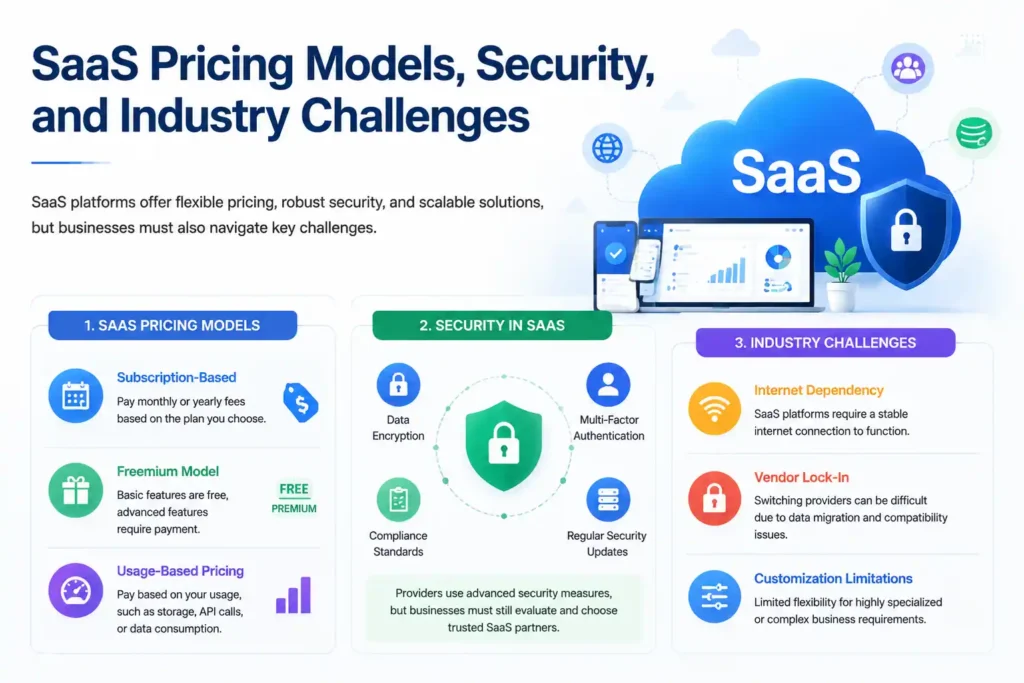
Some SaaS platforms also offer freemium models, where basic features are free, and advanced features require payment. This allows users to test the software before committing financially. Another model is usage-based pricing, where users are charged based on consumption, such as storage or API calls.
Security is a major concern in SaaS platforms because data is stored on cloud servers. However, most providers use advanced encryption techniques, multi-factor authentication, and strict compliance standards to protect user data. Despite this, businesses must carefully evaluate SaaS providers before trusting them with sensitive information.
Challenges also exist in SaaS adoption. One common issue is dependency on internet connectivity. Without a stable connection, users cannot access cloud software. Another challenge is vendor lock-in, where switching providers becomes difficult due to data migration issues.
Customization limitations can also be a drawback, especially for businesses that require highly specialized software solutions.
Future of SaaS Platforms: AI, Automation, and Cloud Innovation
The future of SaaS platforms is closely tied to advancements in artificial intelligence, automation, and cloud technology. The next generation of SaaS systems will be more intelligent, adaptive, and personalized than ever before.
AI is already transforming SaaS platforms by enabling predictive analytics, automated workflows, and smart decision-making systems. For example, AI-powered SaaS tools can analyze user behavior and suggest improvements in real time.
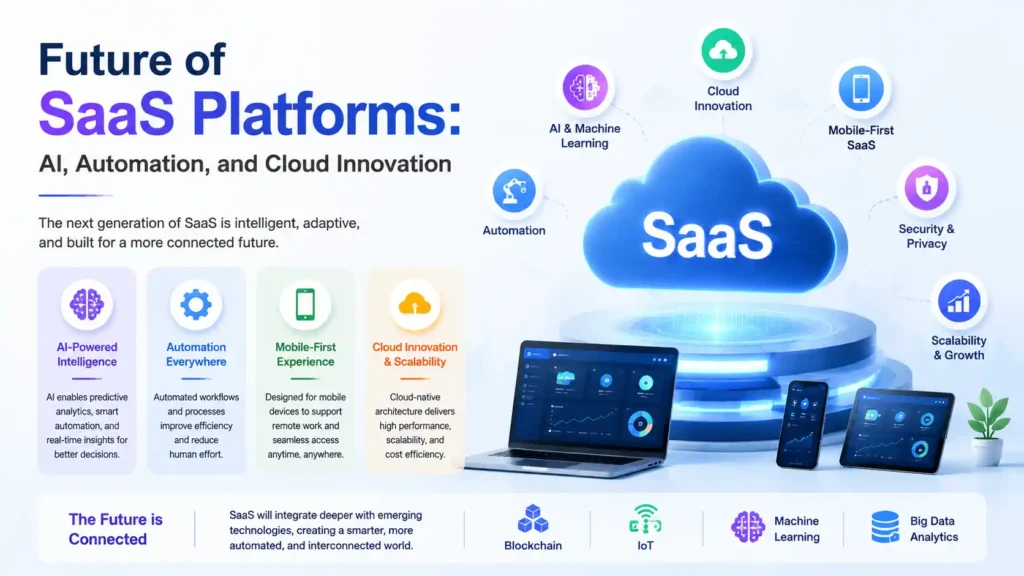
Another major trend is the rise of mobile-first SaaS platforms, which are designed specifically for smartphones and tablets. This ensures seamless access across all devices, supporting the growing demand for remote and flexible work environments.
Cloud-native SaaS applications are also becoming more advanced, offering better performance, faster processing, and improved scalability. Businesses are increasingly shifting toward fully cloud-based ecosystems to improve efficiency and reduce infrastructure costs.
As SaaS continues to evolve, it is expected to integrate deeper with technologies like blockchain, IoT, and machine learning, creating a more connected and automated digital world.
Why SaaS Platforms Are the Future of Digital Technology
SaaS platforms have fundamentally changed the way software is delivered, accessed, and used across the globe. The Software as a Service model offers unmatched flexibility, scalability, and cost efficiency, making it the preferred choice for modern businesses and individuals.
From startups to multinational corporations, everyone benefits from SaaS because it eliminates technical complexity and provides instant access to powerful digital tools. As technology continues to evolve, SaaS will remain at the center of digital transformation, shaping the future of work, communication, and business operations.
The shift toward cloud-based software is not just a trend—it is a permanent change in how the world interacts with technology. SaaS platforms will continue to grow, innovate, and redefine the boundaries of what software can achieve.
FAQs
1. What is SaaS (Software as a Service) and how does it work in cloud computing?
SaaS, or Software as a Service, is a cloud computing model where software applications are hosted on remote servers and accessed through the internet. Instead of installing programs on your computer, users simply log in via a browser and use the software online. SaaS works by storing data in the cloud, processing user requests in real time, and delivering results instantly, making it a core part of modern cloud computing SaaS platforms used worldwide.
2. What are the best SaaS platforms for business and startups in 2026?
The best SaaS platforms for businesses and startups include tools like Google Workspace for productivity, Salesforce for CRM, Shopify for eCommerce, Zoom for communication, and Dropbox for cloud storage. These platforms are widely used because they offer scalability, affordability, and easy integration. Many startups prefer SaaS tools because they reduce operational costs and provide enterprise-level features without heavy infrastructure investment.
3. Why is SaaS better than traditional software installation?
SaaS is better than traditional software because it eliminates the need for manual installation, hardware dependency, and constant updates. Unlike traditional software, SaaS platforms are accessible from anywhere, automatically updated, and cost-effective through subscription pricing. Businesses prefer SaaS because it reduces IT workload, improves productivity, and ensures secure cloud-based data management.
4. Is SaaS secure for storing sensitive business data online?
Yes, modern SaaS security systems are highly advanced and designed to protect sensitive business data. SaaS providers use encryption, firewalls, multi-factor authentication, and compliance certifications like GDPR and ISO standards. However, users must also choose trusted SaaS providers and follow security best practices such as strong passwords and access control to ensure maximum protection.
5. What are the advantages of SaaS platforms for small businesses and entrepreneurs?
The biggest advantages of SaaS platforms for small businesses include low startup cost, easy access, scalability, and no need for IT infrastructure. Entrepreneurs can launch and manage operations using SaaS tools like accounting software, CRM systems, and marketing platforms without large investments. SaaS allows small businesses to compete with larger companies by using powerful cloud-based tools.
6. How does SaaS pricing work and what are common SaaS subscription models?
SaaS pricing typically works on a subscription-based model where users pay monthly or annually. The most common SaaS pricing models include freemium plans, tiered pricing, usage-based pricing, and enterprise custom pricing. These flexible models allow users to choose plans based on features, usage level, and business size, making SaaS cost-effective for both individuals and companies.
7. What are examples of popular SaaS applications used worldwide?
Popular SaaS applications worldwide include Google Drive, Microsoft 365, Slack, Salesforce, Shopify, Canva, and Zoom. These platforms are widely used for communication, project management, design, cloud storage, and business automation. SaaS applications are popular because they are easy to use, scalable, and accessible from any device.
8. What is the future of SaaS industry and cloud-based software solutions?
The future of the SaaS industry is strongly connected to artificial intelligence, automation, and cloud-first technologies. SaaS platforms are becoming smarter with AI-powered analytics, automated workflows, and predictive systems. In the future, SaaS will integrate more with machine learning, IoT, and blockchain, making cloud software more intelligent, secure, and efficient for global businesses.