
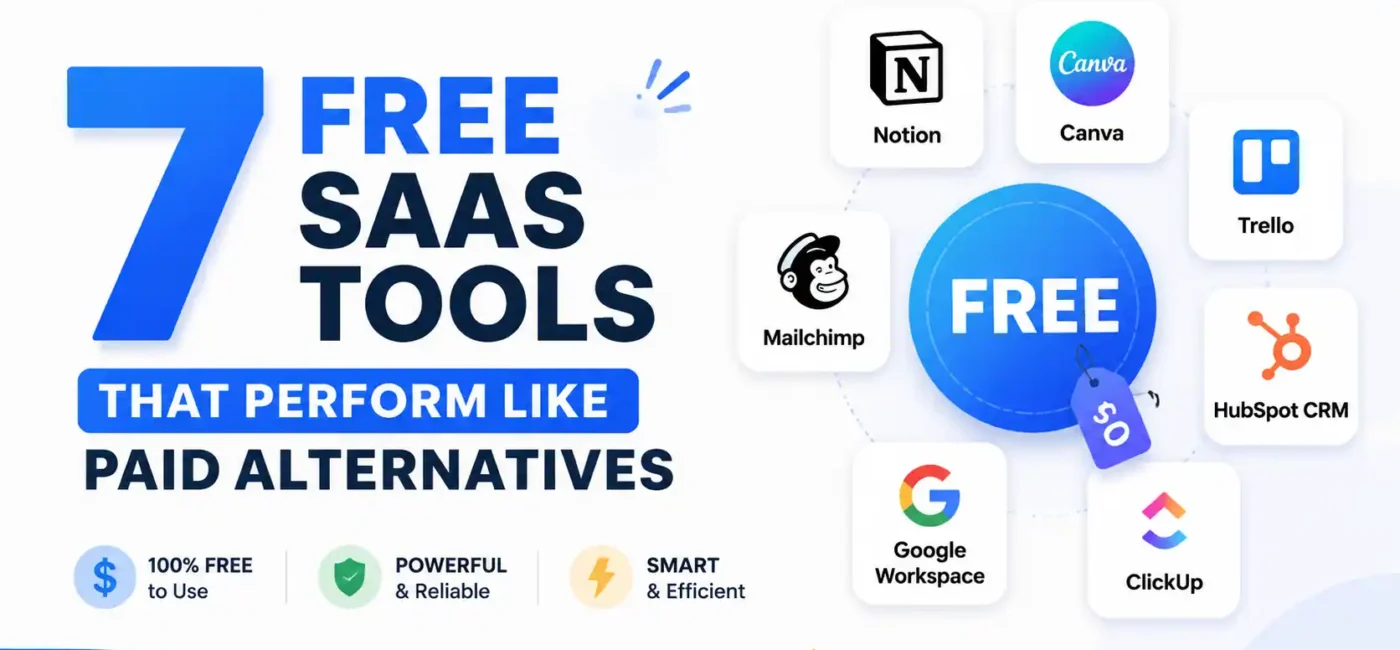
In the modern digital economy, SaaS tools have become the backbone of almost every business operation. From customer relationship management to automation, design, analytics, and scheduling, companies now rely heavily on cloud-based software to run daily workflows. But there is a growing problem that most startups, marketers, and even developers face: subscription overload.
Every tool comes with a monthly fee. One for CRM, one for automation, one for design, one for writing assistance, and suddenly you are spending hundreds or even thousands of dollars every month just to keep your business running. This is exactly why the demand for free SaaS tools that perform like paid alternatives is exploding.
What’s interesting is that free SaaS tools in 2026 are no longer “limited demos.” Many of them now offer enterprise-level features, open-source flexibility, API integrations, and scalable performance that directly compete with expensive tools like HubSpot, Zapier, Canva Pro, Grammarly Premium, Trello, and Calendly.
In this detailed guide, we will explore 7 powerful free SaaS tools that can replace paid software without sacrificing productivity, especially for marketers, small businesses, and developers who need high performance without high cost.
Zoho CRM Free – A Powerful HubSpot and Salesforce Alternative
Customer relationship management is the heart of every business. Without proper lead tracking, pipeline management, and customer communication, scaling becomes impossible. Tools like HubSpot CRM and Salesforce dominate the industry, but they quickly become expensive once automation and scaling requirements increase.
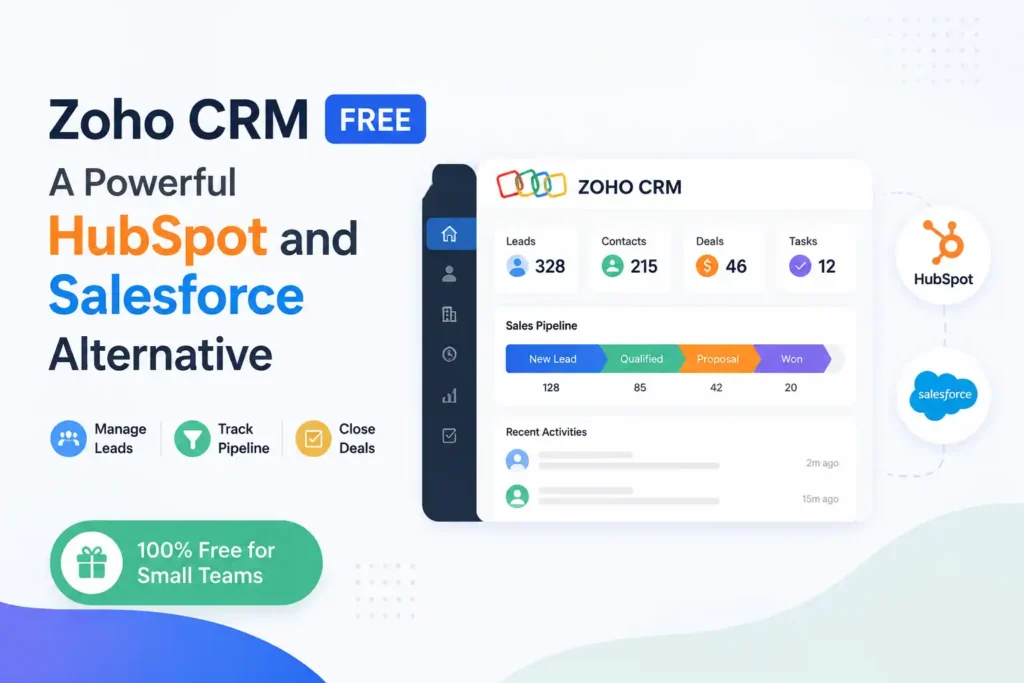
This is where Zoho CRM Free stands out as one of the strongest alternatives available today.
Zoho CRM offers a structured system for managing leads, contacts, deals, and activities in a centralized dashboard. Even in its free version, it allows small teams to operate like enterprise sales departments. You can track customer journeys, manage pipelines, assign tasks, and even automate basic workflows without paying anything.
For marketers, this is extremely powerful because it allows complete visibility of the funnel—from lead generation to conversion—without investing in expensive CRM subscriptions. Developers also appreciate Zoho’s integration support and API flexibility, which allows custom workflow building.
Compared to paid CRMs, Zoho’s free plan eliminates unnecessary complexity and focuses on core sales operations, making it ideal for startups that want to scale smartly without financial pressure.
AppFlowy – Open Source Notion Alternative for Productivity and Knowledge Management
Notion has become one of the most widely used productivity platforms in the world, but it comes with limitations such as cloud dependency, pricing constraints, and restricted customization. For users who want full control over their data and workspace, AppFlowy is emerging as a serious alternative.
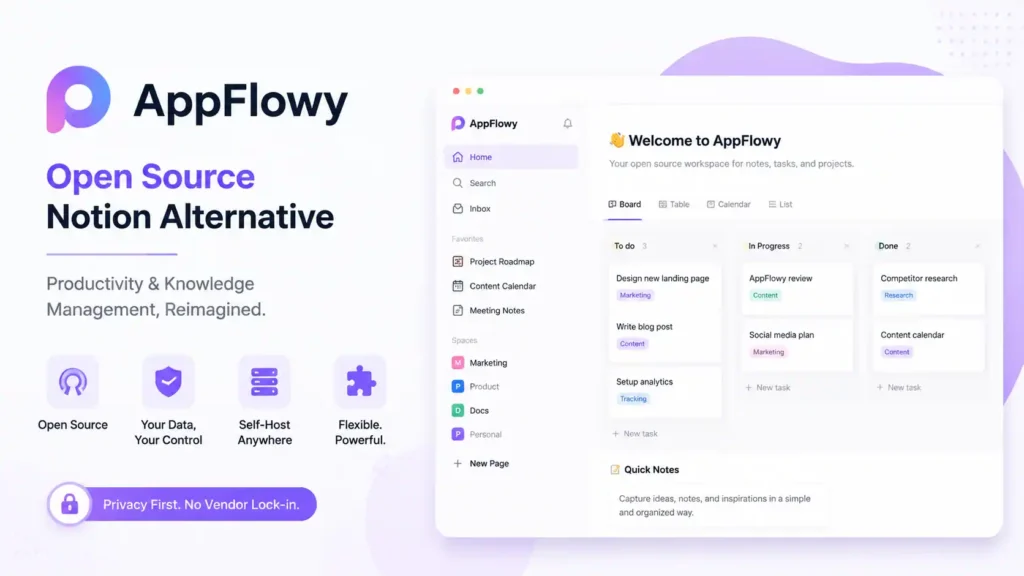
AppFlowy is an open-source productivity and knowledge management platform designed to replicate and enhance Notion-like functionality. It supports documents, databases, kanban boards, task management, and structured note-taking—all inside a flexible workspace system.
The biggest advantage of AppFlowy is data ownership and offline control. Unlike Notion, where everything is stored in a closed cloud environment, AppFlowy allows self-hosting. This means developers and companies can host their own productivity system, ensuring privacy and long-term control over business data.
Marketers use AppFlowy for campaign planning, content calendars, and documentation systems. Developers use it for product roadmaps, sprint planning, and technical documentation. The interface is lightweight, fast, and customizable, making it suitable for teams that need flexibility without recurring costs.
The Most Powerful Free Alternative to Zapier for Automation
Automation is no longer optional in modern business. Whether you are handling email campaigns, lead routing, CRM updates, or content distribution, automation saves time and eliminates manual work. Zapier is the most popular automation tool, but its pricing model based on tasks makes it expensive at scale.
n8n (node-based workflow automation tool) is one of the most powerful open-source alternatives to Zapier, offering unlimited automation potential without per-task charges.
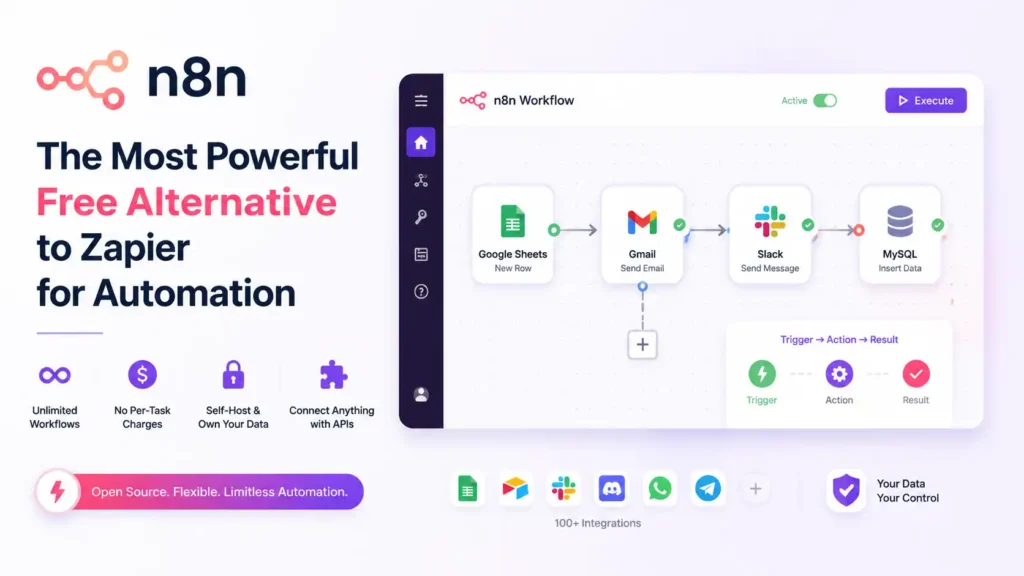
n8n allows users to visually create workflows that connect multiple applications. You can integrate APIs, databases, CRMs, messaging platforms, and cloud tools into a single automated system. Unlike many SaaS tools, n8n can be self-hosted, meaning businesses can run unlimited workflows without worrying about usage limits.
For marketers, n8n enables automated lead nurturing, email sequences, and content distribution across platforms. For developers, it acts as a backend automation engine that can connect services like Google Sheets, Slack, MySQL, and custom APIs.
The real power of n8n lies in its flexibility. It does not restrict you to pre-built integrations—you can build almost any automation logic you want, making it a serious competitor to expensive automation platforms.
Adobe Express Free – Canva Alternative for Marketing and Design Work
Design is a critical part of digital marketing, especially for social media, ads, branding, and content creation. Canva Pro is widely used, but many of its best features require paid subscriptions.
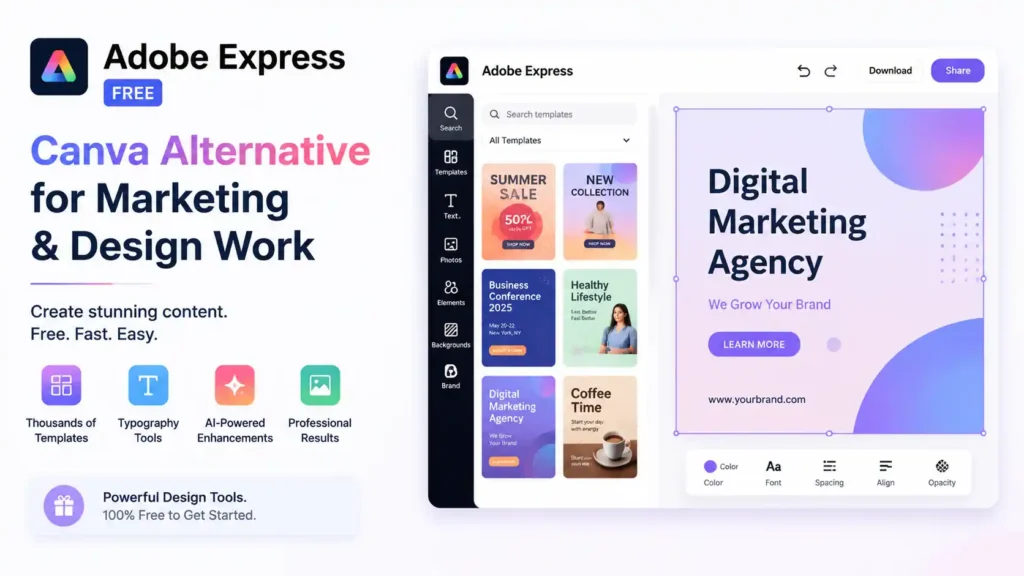
Adobe Express (Free Plan) provides a strong alternative for marketers and creators who need professional-quality design tools without paying monthly fees.
Adobe Express includes thousands of templates for social media posts, banners, flyers, presentations, and ads. It also offers drag-and-drop editing, typography tools, and basic AI-powered enhancements for images.
What makes Adobe Express stand out is Adobe’s long-standing expertise in creative software. Even in the free version, the editing experience feels smooth and professional. While Canva offers a larger library and more collaboration tools in its paid version, Adobe Express is more than enough for daily marketing content needs.
Small businesses and marketers can use Adobe Express to design branding materials, create social posts, and build visual campaigns without relying on expensive design subscriptions.
LanguageTool – A Strong Grammarly Alternative for SEO and Content Writing
Content quality plays a massive role in SEO, email marketing, and brand communication. Grammarly is the most popular writing assistant, but many of its advanced features are locked behind premium plans.
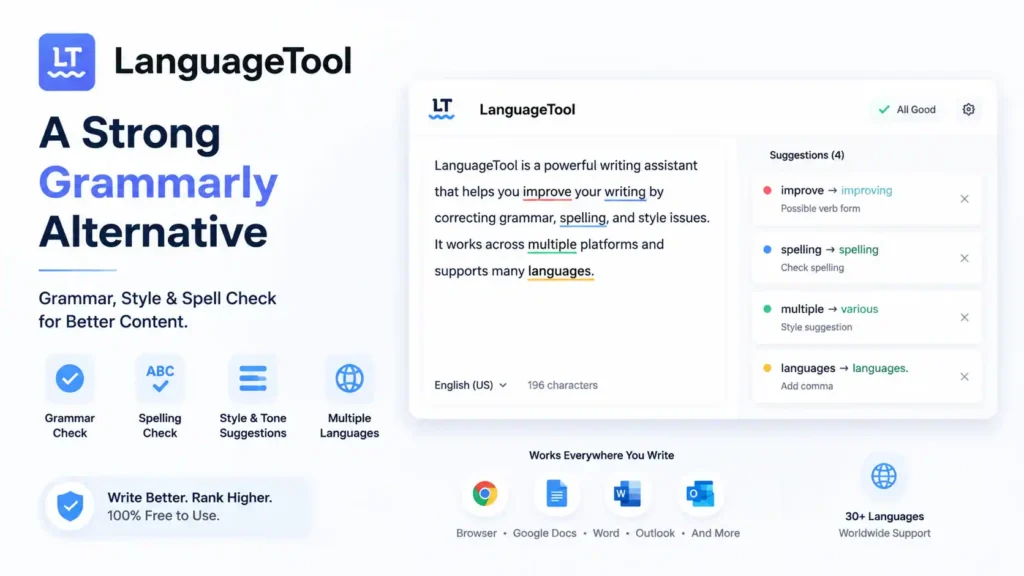
LanguageTool is a powerful free alternative that provides grammar correction, spelling checks, punctuation fixes, and stylistic improvements across multiple languages.
One of its biggest advantages is multilingual support, which makes it ideal for global businesses, SEO writers, and content marketers working across different regions.
LanguageTool integrates with browsers, Google Docs, Microsoft Word, and email platforms, making it a flexible tool for daily writing tasks. It also provides suggestions for sentence clarity and tone improvements, which is extremely useful for SEO-optimized content creation.
For marketers and developers who write documentation, emails, or blog content regularly, LanguageTool offers most of Grammarly’s core features without requiring a subscription.
ClickUp Free – All-in-One Project Management Replacement for Trello and Asana
Managing projects efficiently is essential for productivity, especially in remote and hybrid work environments. Trello and Asana are popular tools, but their free versions often feel limited.
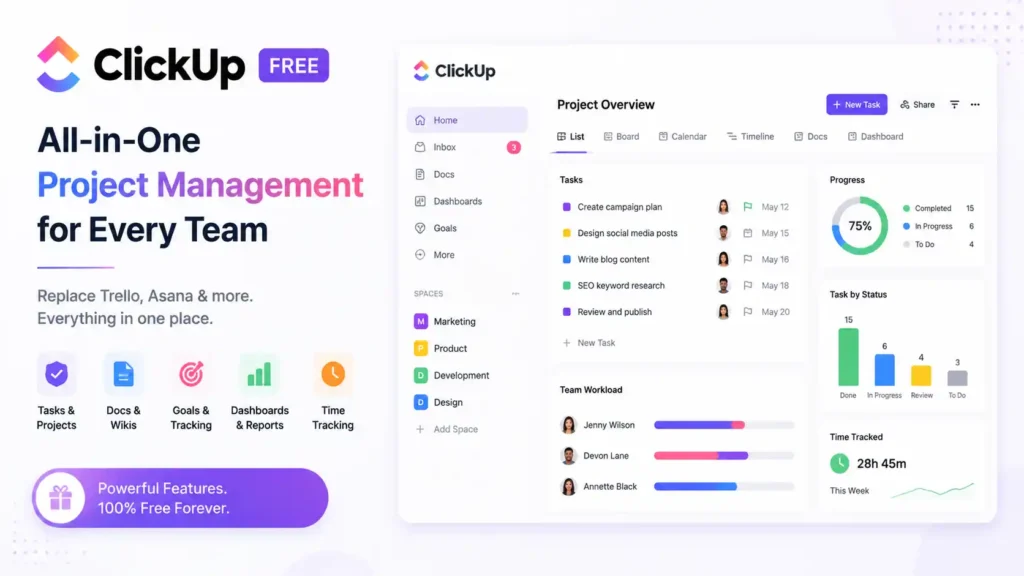
ClickUp Free Plan is one of the most advanced productivity tools available without payment. It combines task management, document creation, goal tracking, dashboards, and even basic time tracking into a single platform.
ClickUp allows teams to manage projects using multiple views such as lists, boards, calendars, and timelines. It supports collaboration features that help marketing teams, developers, and freelancers stay aligned on tasks and deadlines.
Marketers use ClickUp for campaign planning, content calendars, and SEO task management. Developers use it for sprint planning, bug tracking, and feature development. Its flexibility allows it to replace multiple tools at once.
For small businesses, ClickUp can become the central hub for all project-related activities without any subscription costs.
Cal.com – Open Source Alternative to Calendly for Scheduling Automation
Scheduling meetings can become complicated when dealing with multiple clients, teams, and time zones. Calendly solves this problem, but its premium features are locked behind subscriptions.
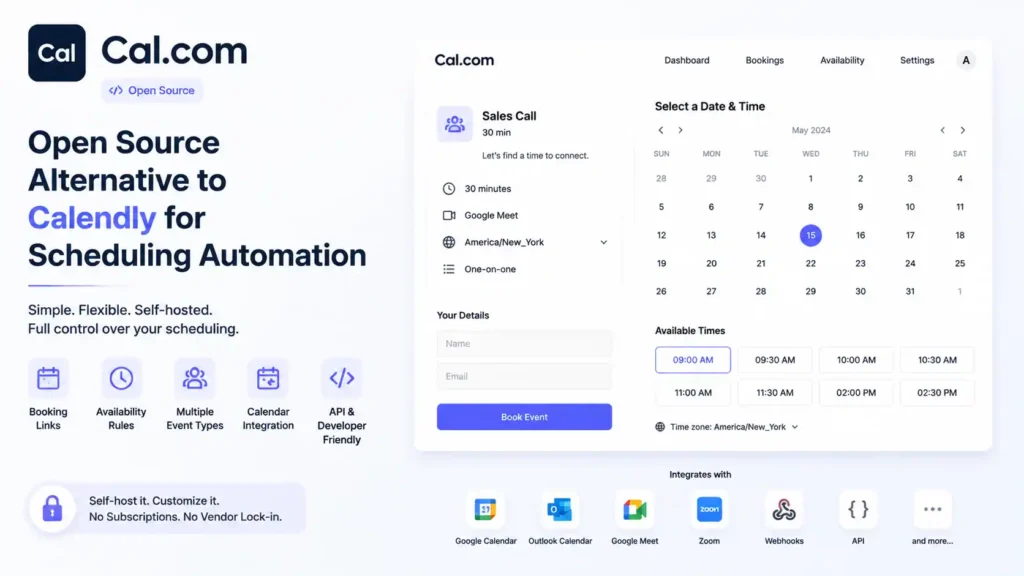
Cal.com is an open-source scheduling tool that offers similar functionality with greater flexibility and customization.
It allows users to create booking links, set availability rules, manage meeting types, and integrate calendars. The biggest advantage is that Cal.com can be self-hosted, giving businesses full control over their scheduling system.
Developers can integrate Cal.com into websites, apps, and CRM systems using APIs. Marketers use it for booking sales calls, consultations, and client meetings without manual coordination.
Compared to Calendly, Cal.com provides more customization freedom and eliminates vendor lock-in, making it a preferred choice for technical teams.
Why Free SaaS Tools Are Replacing Paid Software in 2026
The SaaS industry is undergoing a major transformation. Free tools are no longer basic versions of paid software—they are becoming fully functional ecosystems capable of handling real business workloads.
The main reasons behind this shift include:
- Growth of open-source SaaS development
- AI-driven automation and tool enhancement
- Competitive freemium business models
- Demand for cost-effective scaling solutions
- API-first architecture enabling integrations
For marketers and developers, this means one thing: you can now build a complete business stack without heavy subscription costs.
Final Thoughts
Free SaaS tools have reached a point where they are not just alternatives—they are serious competitors to paid platforms. Tools like Zoho CRM, AppFlowy, n8n, Adobe Express, LanguageTool, ClickUp, and Cal.com show that businesses no longer need to depend entirely on expensive subscriptions to achieve professional results.
For startups, marketers, and developers, the smartest strategy today is not to chase expensive software, but to build a flexible, scalable stack using high-quality free SaaS tools and upgrade only when necessary.
The future of SaaS is clear: more power, less cost, and complete control in the hands of users.
FAQ
1- What are the best free SaaS tools in 2026?
The best free SaaS tools in 2026 include Zoho CRM Free, n8n, ClickUp, AppFlowy, Adobe Express, LanguageTool, and Cal.com. These tools offer powerful features like CRM management, automation, design, writing assistance, and project management without requiring paid subscriptions. Many of them are used by startups and small businesses as cost-effective alternatives to expensive SaaS platforms.
2- Which free SaaS tools are better than paid tools?
Several free SaaS tools now perform close to or even better than paid tools in specific use cases. For example, n8n is a strong alternative to Zapier, AppFlowy competes with Notion, and Adobe Express can replace Canva Pro for basic design work. These tools are popular because they provide essential features without monthly fees, making them ideal for budget-conscious users.
3- Is there a free alternative to Zapier for automation?
Yes, the most popular free alternative to Zapier is n8n (open-source automation tool). It allows users to build unlimited workflows, connect apps, automate tasks, and integrate APIs without paying per task. Unlike Zapier, n8n can also be self-hosted, giving full control over automation systems and data privacy.
4- What is the best free CRM software like HubSpot?
The best free CRM alternative to HubSpot is Zoho CRM Free. It includes lead management, contact tracking, sales pipeline management, and basic automation features. It is widely used by small businesses and startups because it provides essential CRM functions without requiring a paid upgrade.
5-What is the best free alternative to Notion?
The best free alternative to Notion is AppFlowy, an open-source productivity and note-taking platform. It supports documents, databases, task boards, and project management features similar to Notion. Unlike Notion, AppFlowy also allows self-hosting and full data ownership, making it popular among developers and privacy-focused users.
6- What is the best free Canva alternative for design?
The best free Canva alternative is Adobe Express Free. It provides templates for social media posts, ads, banners, and marketing content. It also includes drag-and-drop editing and basic AI design tools. While Canva Pro has more advanced features, Adobe Express is strong enough for most marketing and business design needs.
7-What is the best free Grammarly alternative?
The best free Grammarly alternative is LanguageTool. It offers grammar correction, spelling checks, style suggestions, and multilingual writing support. It works on browsers, Google Docs, and email platforms, making it ideal for bloggers, marketers, and SEO writers who need accurate content writing assistance.
8-What is the best free project management tool like Trello?
The best free alternative to Trello is ClickUp Free Plan. It includes task management, boards, calendars, docs, goal tracking, and collaboration tools. Many teams prefer ClickUp because it combines multiple productivity tools into one platform without requiring paid upgrades.
9-What is the best free scheduling tool like Calendly?
The best free alternative to Calendly is Cal.com, an open-source scheduling platform. It allows users to create booking links, manage availability, and integrate calendars. It also supports self-hosting, which gives businesses full control over scheduling workflows and branding.
10- Are free SaaS tools safe for business use?
Yes, most modern free SaaS tools are safe for business use if they come from trusted providers. Tools like Zoho, ClickUp, and Adobe use secure cloud infrastructure and encryption. Open-source tools like n8n and AppFlowy also offer transparency, which improves trust and security for businesses.
11- Can free SaaS tools replace paid software completely?
Free SaaS tools can replace paid software for many small and medium businesses. However, large enterprises may still require premium features such as advanced analytics, enterprise security, or large-scale automation. For startups and marketers, free tools are often more than enough to run daily operations.
12- Why are free SaaS tools becoming so popular?
Free SaaS tools are becoming popular because they reduce business costs, offer scalable features, and provide open-source flexibility. Many companies now prefer freemium tools because they allow them to start for free and upgrade only when necessary. This makes them ideal for startups and digital marketers.
13- Which free SaaS tools are best for startups?
Startups often use:
- Zoho CRM Free (sales management)
- n8n (automation workflows)
- ClickUp (project management)
- AppFlowy (documentation & notes)
- Adobe Express (design tools)
- LanguageTool (content writing)
- Cal.com (scheduling)
These tools help startups build a complete digital stack without high subscription costs.
14- Do free SaaS tools have limitations?
Yes, most free SaaS tools have some limitations such as reduced storage, limited integrations, or fewer advanced features. However, for most users, the free versions are powerful enough to handle daily business operations and workflows effectively.
15- What is the future of free SaaS tools?
The future of SaaS is moving toward freemium and open-source ecosystems. More tools will offer free versions with powerful features to compete in the market. AI integration and API-based automation will make free SaaS tools even more capable in the coming years.