
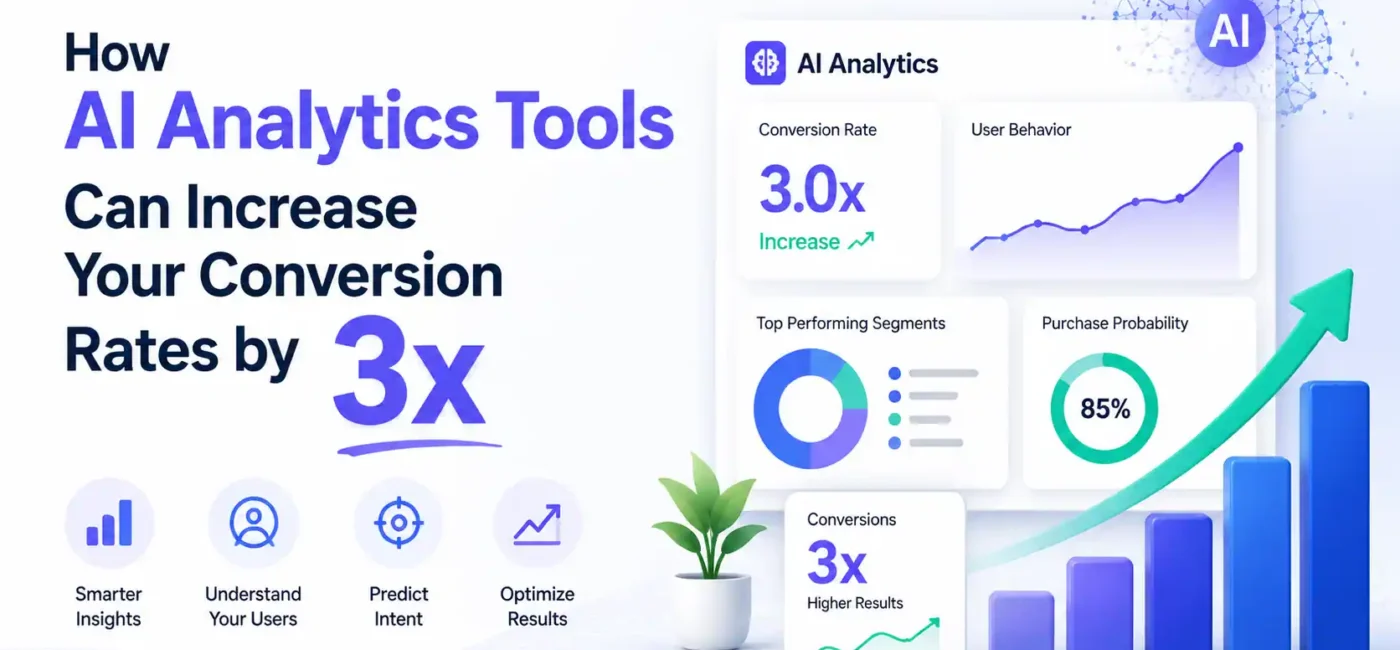
In the rapidly evolving world of digital marketing, conversion rate isn’t just a number; it’s the heartbeat of your business growth. More visitors don’t automatically translate into more sales, leads, or signups. What truly matters is how many of those visitors take meaningful action, engage with your content, and move through your sales funnel. This is where AI analytics tools shine like never before. Artificial Intelligence isn’t a futuristic buzzword anymore; it has become a deeply embedded strategy that helps businesses analyze behavior, predict customer intent, and optimize experiences to boost conversion rates rapidly. In fact, many companies today report conversion improvements of up to 3× or more when leveraging AI analytics compared to traditional optimization methods, proving that smart data-driven strategies can deliver tangible revenue growth and higher ROI.
This detailed guide breaks down exactly how AI analytics tools drive conversion growth, why they consistently outperform traditional methods, and provides proven real-world examples that demonstrate the transformation in action.
What Are AI Analytics Tools?
Let’s start with the basics. AI analytics tools are software platforms that use machine learning, predictive modeling, and automated data analysis to:
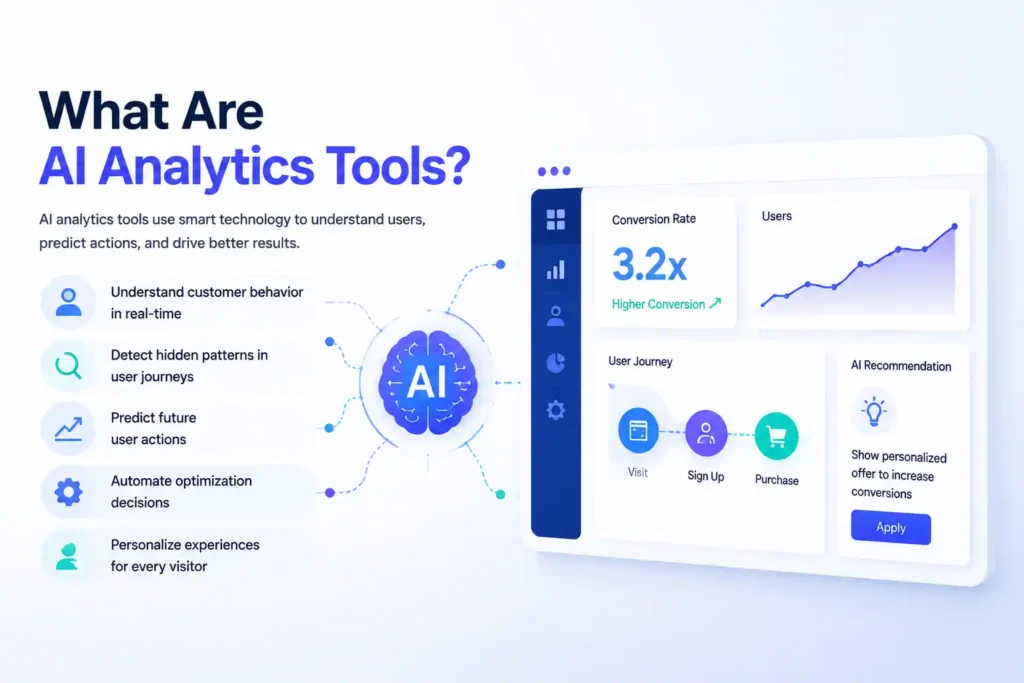
- Understand customer behavior in real-time
- Detect hidden patterns in user journeys
- Predict future user actions
- Automate optimization decisions
- Personalize experiences for every visitor
This isn’t simply reporting data; AI actually interprets behavior and turns it into actions that directly impact conversions.
Instead of manually guessing what might improve a landing page or sales funnel, AI tools learn from real user interactions and make recommendations backed by data, often in real time. Think of them like a team of conversion experts analyzing every visitor’s intention simultaneously.
Why AI Analytics Is a Game-Changer for Conversions?
Traditional analytics tools show you data after something has already happened. They say, “Here’s the conversion rate this month”. But modern AI analytics goes several steps further:
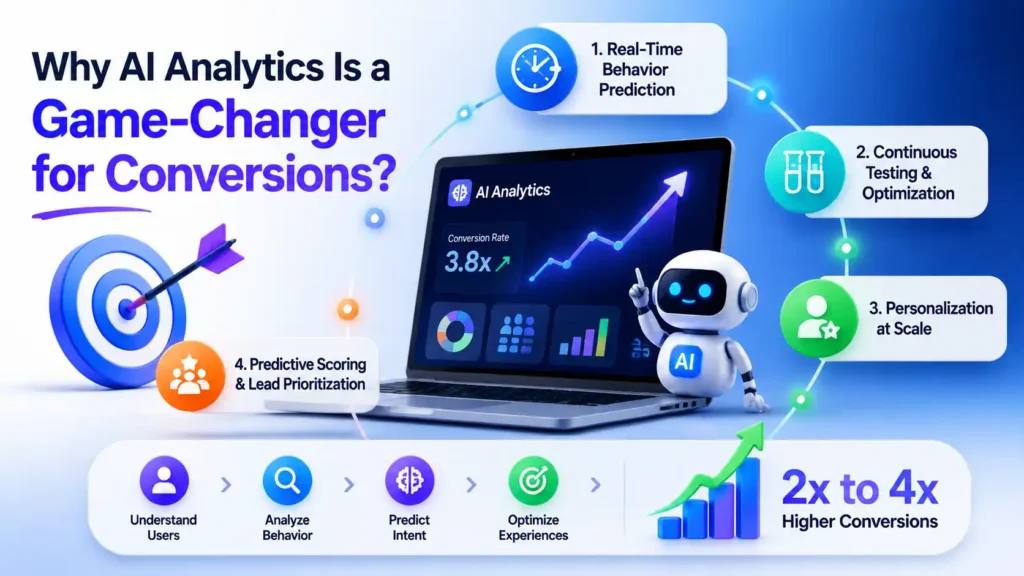
1. Real-Time Behavior Prediction
AI doesn’t wait until the end of the day to show trends it analyzes clicks, scrolls, time on page, and bounce signals moment-by-moment to predict intent before a visitor leaves. That means you can intervene proactively to reduce drop-offs.
2. Continuous Testing and Optimization
Classic A/B testing requires weeks of manual setup and analysis. AI can run multiple tests simultaneously, adapt layouts dynamically, and allocate traffic to the best-performing variants as data flows in.
3. Personalization at Scale
Today’s AI systems tailor offers, headlines, product recommendations, and even CTAs for every visitor based on real-time behavior, something that’s impossible to do manually on a large scale. Personalization isn’t optional anymore; it’s expected by users, and it’s a huge conversion booster.
4. Predictive Scoring and Lead Prioritization
AI calculates which visitors are most likely to convert and highlights them for special treatment like targeted popups, chatbot interactions, or priority follow-up, increasing the likelihood of conversion.
These combined capabilities enable companies to consistently outperform traditional conversion strategies not by a little, but by amounts that dramatically impact revenue.
In fact, studies show AI-powered methods often improve conversion metrics by 15–25% or more, and in specific AI-engaged scenarios, conversion performance can be 2× to 4× higher than unassisted user journeys.
How AI Tools Specifically Boost Conversions?
Let’s break down the key ways AI analytics tools help businesses convert more visitors into customers.
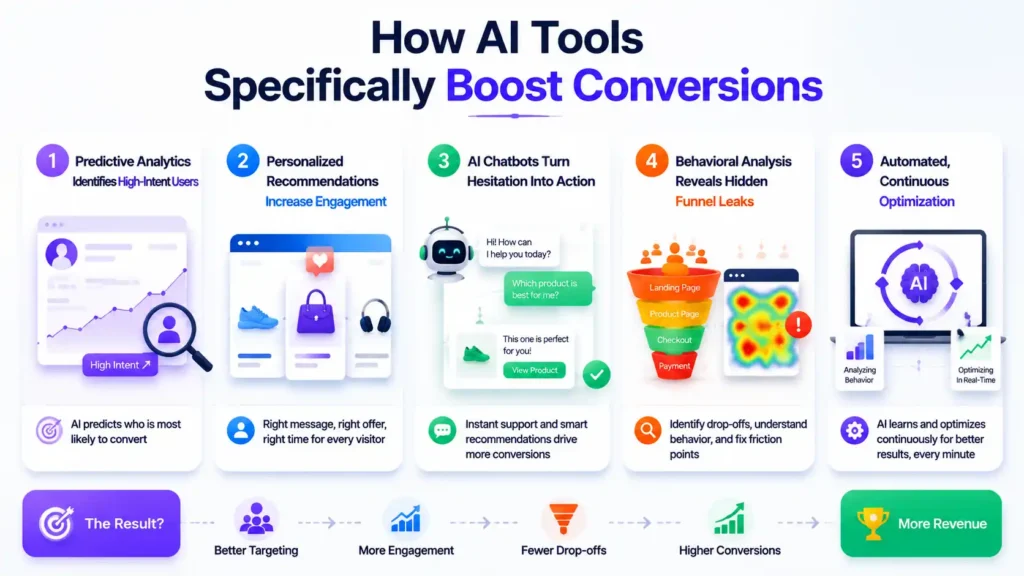
1. Predictive Analytics Identifies High-Intent Users
One of the biggest advantages of AI is the ability to identify who is most likely to convert before they take any action. Instead of waiting for a visitor to purchase and then analyzing why, AI forecasts intent using historical data, browsing patterns, and interaction signals.
For example:
- Users who linger on product descriptions and scroll slowly are interpreted as having higher intent than those who bounce immediately.
- Exit signals like rapid upward mouse movement trigger customized exit offers or warnings.
This kind of intelligent prediction allows businesses to target the right visitors with tailored actions, which greatly increases conversion potential. According to analysts, companies using predictive AI tools often see conversion improvements as high as up to 50% compared to traditional methods.
2. Personalized Recommendations Increase Engagement
Generic content rarely converts. AI changes that by displaying unique product recommendations, offers, or messaging based on a user’s interaction history.
This could look like:
- A personalized product section based on browsing history
- Custom pop-ups offering discounts for first-time visitors
- Dynamic headlines that match user intent
This level of personalization accelerates purchase decisions and increases cart values, a crucial component of conversion success.
3. AI Chatbots Turn Hesitation Into Action
AI-powered chatbots aren’t just for customer support; they are conversion machines when used strategically. They can:
- Answer questions instantly
- Provide product guidance
- Recommend offers in real time
- Recover abandoned carts
Industry data shows that visitors who interact with an AI chatbot are significantly more likely to convert with conversion rates sometimes reaching 12.3% for chatbot-engaged sessions versus around 3.1% for unassisted browsing.
That’s nearly a 4× increase, a huge impact for a tool that engages users right when hesitation often happens.
4. Behavioral Analysis Reveals Hidden Funnel Leaks
AI analytics isn’t just about boosting conversions it also excels at identifying where conversions are being lost in the first place.
Tools with behavioral insights can:
- Map user journeys across pages
- Detect where drop-offs happen most
- Identify repeated pain points (e.g., confusing checkout, missing pricing info)
This allows teams to fix bottlenecks precisely and quickly rather than guessing. Businesses using AI behavior analysis report improved funnel efficiency and fewer friction points across buyer journeys.
5. Automated, Continuous Optimization
Unlike traditional CRO, which relies on human decisions and slow A/B test cycles, AI continuously learns and adjusts itself based on new behaviors.
Imagine your website refining itself every minute based on real user patterns; that’s the kind of automated optimization AI delivers. The result? Faster improvement cycles and more wins without manual intervention
Top AI Analytics Tools That Lead to Higher Conversions
Here are some powerful AI tools that many businesses use to drive serious conversion results in 2026:
| AI Analytics Tool | Primary Function | Why It Helps Conversions |
| Pathmonk | Intent-based personalization | Boosts important conversion signals and tailors content real time. |
| AI CRO Platforms | Automated optimization & multivariate tests | Continuously improves page elements. |
| Predictive Scoring Tools | Identifies high-value visitors | Prioritizes best leads for conversion nudges. |
| AI Chatbots | Conversational AI guidance | Converts hesitant visitors into customers. |
| Behavioral Intelligence Tools | Detects user patterns | Reveals friction and opportunities. |
Real Examples: AI in Action
Example 1: E-Commerce Personalization Lift
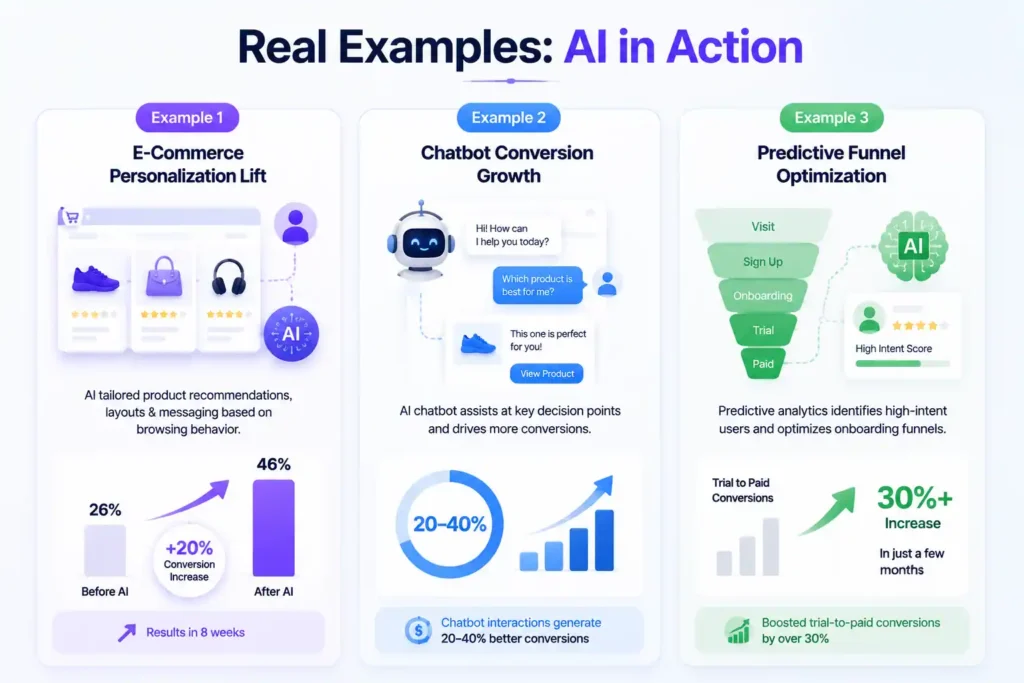
An online retailer used AI to tailor product recommendations, product page layouts, and checkout messaging based on browsing behavior. Within 8 weeks the business saw conversion jump from about 26% to 46% thanks to tailored AI-powered experiences on landing and product pages.
Example 2: Chatbot Conversion Growth
A mid-sized ecommerce company implemented an AI chatbot to assist users at key decision points, such as when they hovered over pricing or visited checkout. Over time, chatbot interactions accounted for a significant portion of total revenue and consistently generated 20–40% better conversions than static pages alone.
Example 3: Predictive Funnel Optimization
A subscription-based SaaS business used predictive analytics tools to identify high-intent visitors and adjust onboarding funnels based on behavior scores. This strategy boosted trial-to-paid conversions by over 30% within months, demonstrating the value of predictive insights for subscription growth.
Key Conversion Statistics (2026)
To put numbers behind the claims:
- AI-powered optimization tools often deliver 15–25% average conversion increases compared to traditional methods.
- AI-engaged user sessions can convert 2×–4× better than unassisted traffic.
- Real-time personalization and predictive scoring improve conversion predictability up to 50% in some deployments.
1. What is AI analytics, and how can it help increase conversion rates?
AI analytics uses artificial intelligence and machine learning to analyze website and user behavior. Unlike traditional analytics, which just show what happened, AI tools can predict what users are likely to do next. By identifying high-intent visitors, optimizing landing pages in real time, and personalizing content, AI analytics can significantly improve conversion rates and drive more sales or leads.
2. Can AI really triple my conversion rates?
Yes, AI has the potential to multiply your conversion rates. Tools like AI-driven personalization engines, predictive scoring, and chatbots are designed to engage visitors at the right time with the right content. Companies that implement these solutions often see 2× to 3× higher conversions compared to standard static websites, especially when combined with optimized sales funnels.
3. How does predictive analytics boost conversions?
Predictive analytics forecasts which visitors are most likely to convert based on historical behavior, interactions, and engagement patterns. By understanding visitor intent early, businesses can deliver personalized offers, timely notifications, or dynamic content — all of which increase the chances of completing purchases or signups. This proactive approach dramatically reduces bounce rates and abandoned carts.
4. Which AI tools are best for improving website conversions?
Some of the top AI tools for conversion optimization include:
- AI personalization platforms for dynamic content and product recommendations
- Chatbots and virtual assistants that guide users in real time
- Behavioral analytics software to identify friction points in funnels
- Predictive scoring engines for prioritizing high-value leads
- Automated A/B testing tools for continuous optimization
These tools help you understand your users, personalize experiences, and remove barriers that prevent conversions.
5. Do AI chatbots really improve sales and lead generation?
Absolutely. AI chatbots act like instant sales assistants, engaging visitors, answering questions, and recommending products. Studies show that visitors who interact with chatbots convert up to 4× more than visitors without AI assistance. Chatbots can also recover abandoned carts, schedule demos, and qualify leads — directly impacting revenue.
6. Are AI analytics tools suitable for small businesses?
Yes! Many AI analytics tools are affordable and scalable for small and medium-sized businesses. Even with modest traffic, these platforms can provide actionable insights, automate repetitive tasks, and help small business owners increase conversions without hiring large marketing teams.