
Picture a Monday morning where the brief is already drafted, the ad variants are queued for review, and the campaign launched while you were asleep. For a lot of marketing teams right now, that’s not hypothetical; it’s just how things run. AI tools have taken over the repetitive tasks: pulling together content drafts, flagging underperforming headlines, and building campaign assets before the first standup. Not because marketers wanted to hand off creative control, but because doing it all manually stopped making sense somewhere around 2024. This piece covers seven tools that have genuinely changed how teams work, what they’re good at, where they fall short, and how they fit together.
What this article covers:
- What human oversight still need to look like when AI is running most of the workflow
- Why the fragmented marketing tool stack is largely a thing of the past
- How ChatGPT speeds up brainstorming, drafting, and campaign planning
- Why does Claude work better for longer, more complex content like briefs and reports
- How Jasper AI handles high-volume content across multiple channels from one brief
- How HubSpot AI connects CRM data to automated, behavior-triggered campaigns
- Why Surfer SEO has replaced manual keyword optimization for most teams
- How AdCreative.ai enables real ad testing at scale without the production bottleneck
- What Canva Magic Studio offers teams that don’t have a dedicated designer
- Why agentic AI is worth paying attention to, even if it’s still early
- How to build a working AI stack for under $200/month
Table of Content:
AI in the Marketing Landscape
The marketing ecosystem of 2026 is unrecognizable compared to five years ago. Previously, marketing teams relied on fragmented stacks: one tool for content generation, another for analytics, a third for ad management, and yet another for SEO. Today, AI integrates these functions into unified, intelligent ecosystems. Businesses leverage AI to analyze customer behavior in real-time, automate multi-channel campaigns, and even predict future engagement trends. Adoption is nearly universal: recent studies report that 96% of B2B marketers use AI in some form, ranging from basic task automation to full-fledged workflow orchestration. Beyond efficiency, AI has transformed roles and expectations. Marketers are now full-stack operators who manage strategy, content, distribution, and analytics within a single integrated system. Instead of focusing on individual tasks, they orchestrate outcomes across campaigns, leveraging AI’s ability to handle repetitive, data-intensive work. This shift allows teams to focus on creative strategy and decision-making while AI executes the operational work.
ChatGPT – The Versatile Content and Strategy Assistant
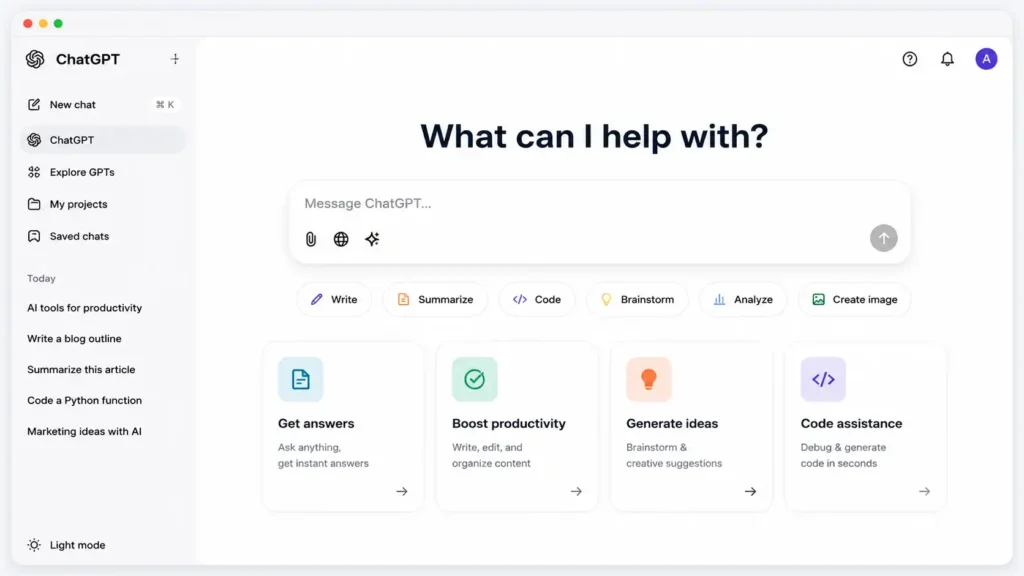
ChatGPT is often described as the Swiss Army knife of AI marketing. It goes far beyond content generation, serving as a creative partner that helps teams brainstorm, plan, and execute campaigns. In practice, marketers use ChatGPT to generate ideas for blog posts, social media campaigns, newsletters, and ad copy. Its ability to understand context and tone allows teams to simulate audience responses before publishing, providing valuable insights into messaging effectiveness. A typical workflow might involve inputting campaign goals, requesting multiple content variations, refining tone, and integrating outputs into a content calendar. For example, an e-commerce brand used ChatGPT to brainstorm seasonal promotions and draft first-round copy, reducing content planning time from three days to two hours. Beyond speed, ChatGPT elevates human creativity by handling repetitive writing and research tasks, letting marketers focus on strategy and refinement.
Pro Tip: Use prompt libraries and templates to maintain brand voice and ensure consistency across campaigns.
Common Pitfall: Over-reliance without review may lead to errors or off-brand content, so always integrate human oversight.
Claude – Long-Form and Strategic Content
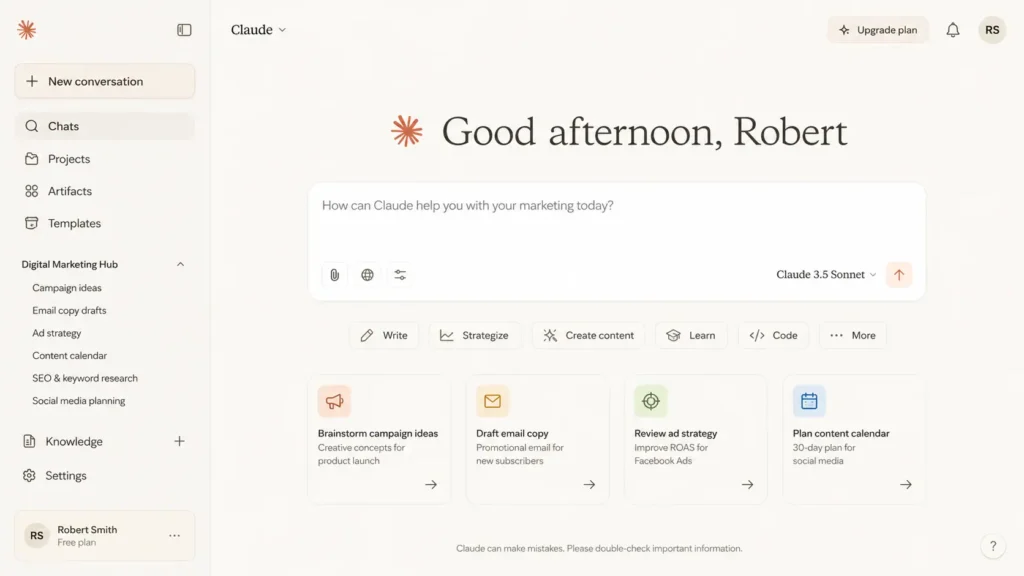
Claude is designed for marketers who need high-quality, nuanced, long-form content. Unlike earlier AI tools that produced formulaic outputs, Claude maintains context, structure, and tone over extended pieces. This makes it ideal for campaign briefs, research-heavy reports, and cornerstone content. Marketers rely on Claude to create comprehensive materials that can inform decision-making or serve as authoritative publications in their niche. A typical usage involves providing detailed instructions, specifying audience and tone, and iterating until the content aligns with strategic goals. For instance, a B2B SaaS company used Claude to produce quarterly thought leadership reports, cutting production time by 60% while ensuring a professional, polished voice.
Pro Tip: Use Claude to generate multiple drafts of strategic content and select the best version, then enhance with human insights for authenticity.
Pitfall: AI may occasionally generate generic insights; always fact-check critical data before publishing.
Jasper AI – Scalable Content Production
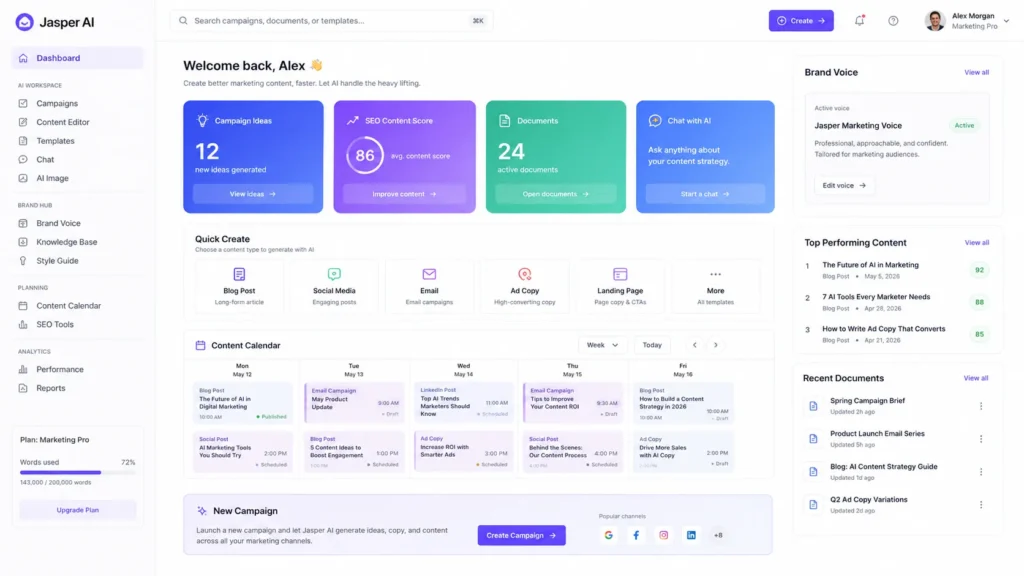
Jasper AI excels in creating large volumes of consistent marketing copy across multiple channels. Its real strength lies not just in writing individual pieces but in orchestrating multi-touch campaigns from a single creative brief. Marketers deploy Jasper for email sequences, landing pages, social media campaigns, and ad copy while ensuring brand voice remains consistent. Integration with content calendars allows automated assignment of tasks, tagging outputs by audience segment, and creating reusable templates for future campaigns. A travel company, for example, used Jasper to generate personalized email campaigns for 15 audience segments, reducing creation time from one week to one day and achieving higher engagement rates. The tool allows teams to scale content production without sacrificing quality, freeing up human marketers for higher-level strategy.
Pro Tip: Pair Jasper with SEO tools to ensure content is optimized for search engines before publication.
Common Pitfall: Overautomation can result in repetitive messaging; always review variations for originality.
HubSpot AI – CRM-Powered Marketing Automation
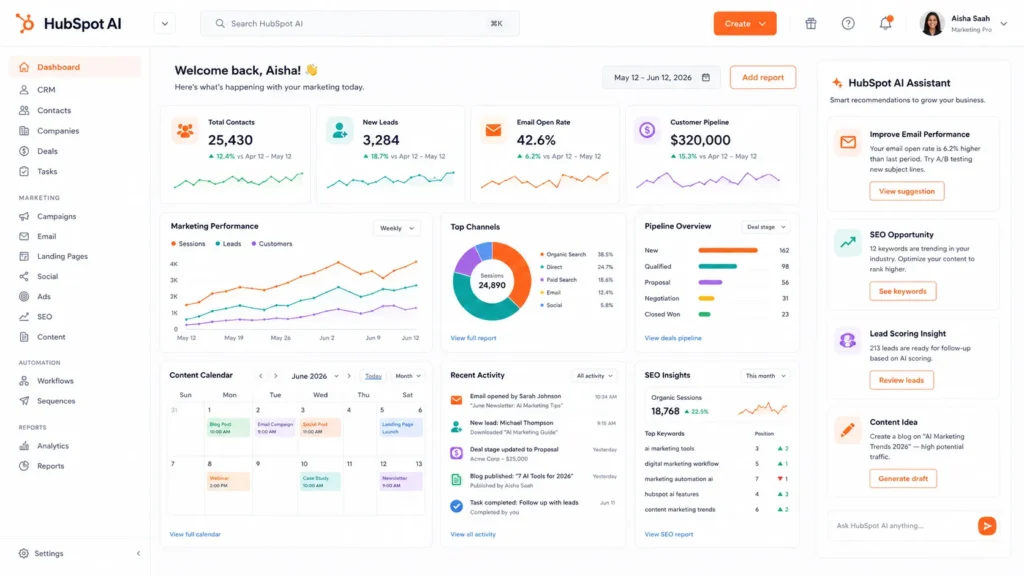
HubSpot AI transforms marketing by integrating CRM data with campaign execution. Its predictive lead scoring identifies high-potential prospects, while automated email personalization tailors content and sending cadence to individual behaviors. Marketers can create sequences that trigger automatically based on user actions, all tied to real-time CRM events. This tight integration ensures campaigns are data-driven and efficient. For example, a B2B company leveraged HubSpot AI to nurture leads automatically, increasing conversion rates by 25% while reducing manual workload for marketing teams. HubSpot AI’s predictive analytics also allow marketers to anticipate customer behavior, optimize engagement, and make data-backed decisions without manual intervention.
Pro Tip: Use AI-driven insights to prioritize high-value leads first for maximum ROI.
Pitfall: Relying solely on automation may miss subtleties in human behavior; complement AI with strategic human oversight.
Surfer SEO – AI-Driven Content Optimization
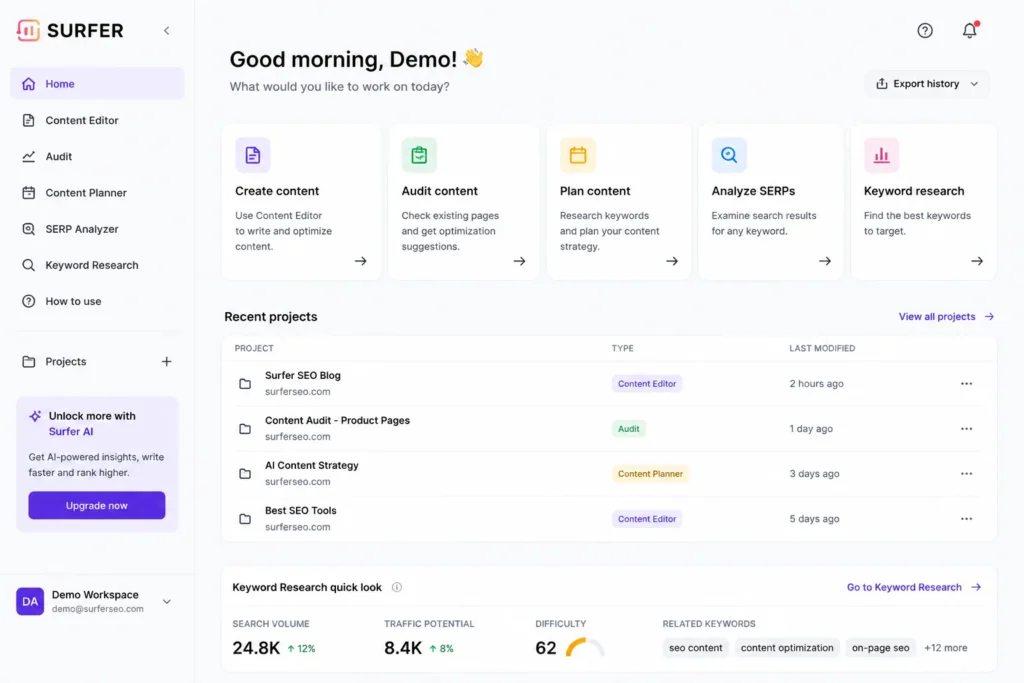
Search engine optimization remains critical, but Surfer SEO has redefined the process for 2026. Instead of manually optimizing keywords, marketers now rely on AI to analyze search intent, semantic topics, and SERP structure in real-time. Surfer provides live content scoring, actionable recommendations, and automated briefs for topic outlines. This integration allows teams to write SEO-friendly content from the start, rather than adjusting after publication. A health-tech startup, for instance, used Surfer SEO to optimize all blog posts, achieving a 40% increase in organic traffic within three months. Marketers can also combine Surfer with content generation tools like ChatGPT or Jasper AI, producing high-quality, SEO-optimized content in less time.
Pro Tip: Always check keyword relevance and intent alignment to avoid ranking for irrelevant search queries.
Pitfall: Ignoring user experience while optimizing purely for SEO can reduce engagement.
AdCreative.ai – Automated Ad Generation
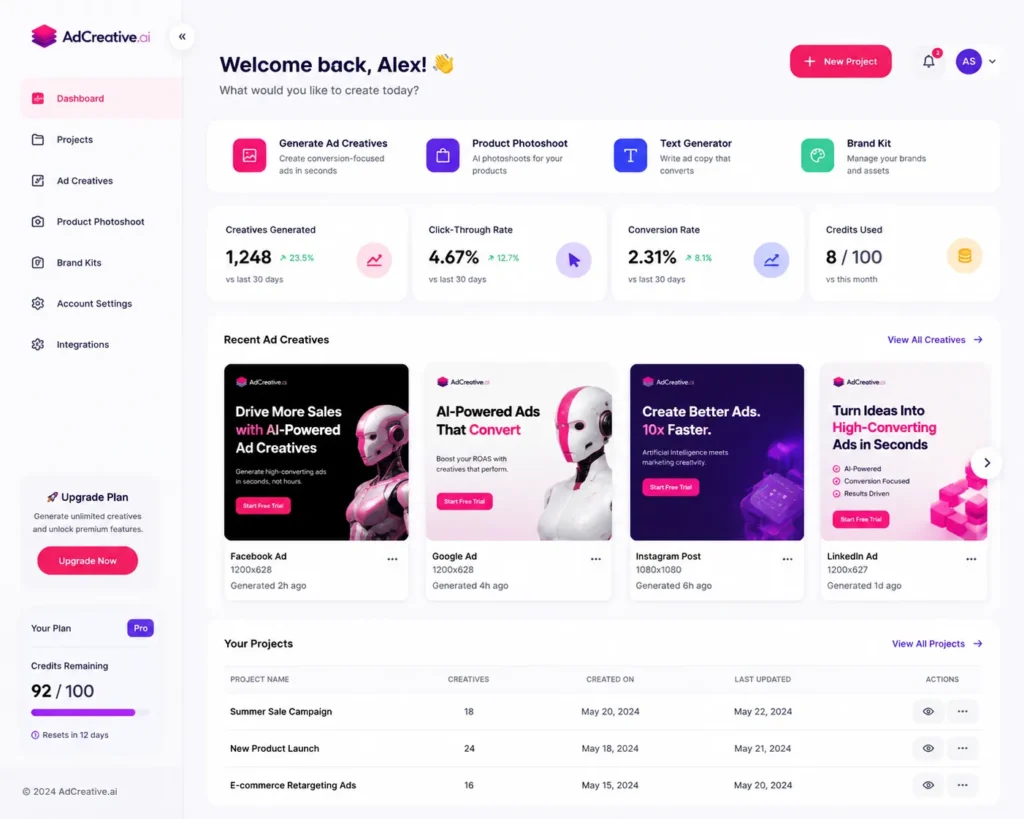
Advertising success depends on testing and iteration, and AdCreative.ai automates this process by generating hundreds of ad variations from a single creative brief. The tool analyzes performance metrics, refines creatives, and formats outputs for multiple platforms, including Facebook, Google, TikTok, and LinkedIn. Marketers can focus on strategic decision-making, while AI handles repetitive creative tasks. For example, a fashion retailer deployed 120 ad variants in one week, compared to 15 manually, boosting ROI by 30%. AdCreative.ai also suggests optimized copy and design adjustments based on live engagement data, allowing continuous performance improvement.
Pro Tip: Monitor generated creatives for brand consistency; AI may produce suggestions that need human validation.
Pitfall: Blindly trusting AI-generated creative without context may misalign messaging with brand identity.
Canva Magic Studio – AI-Powered Visual Design
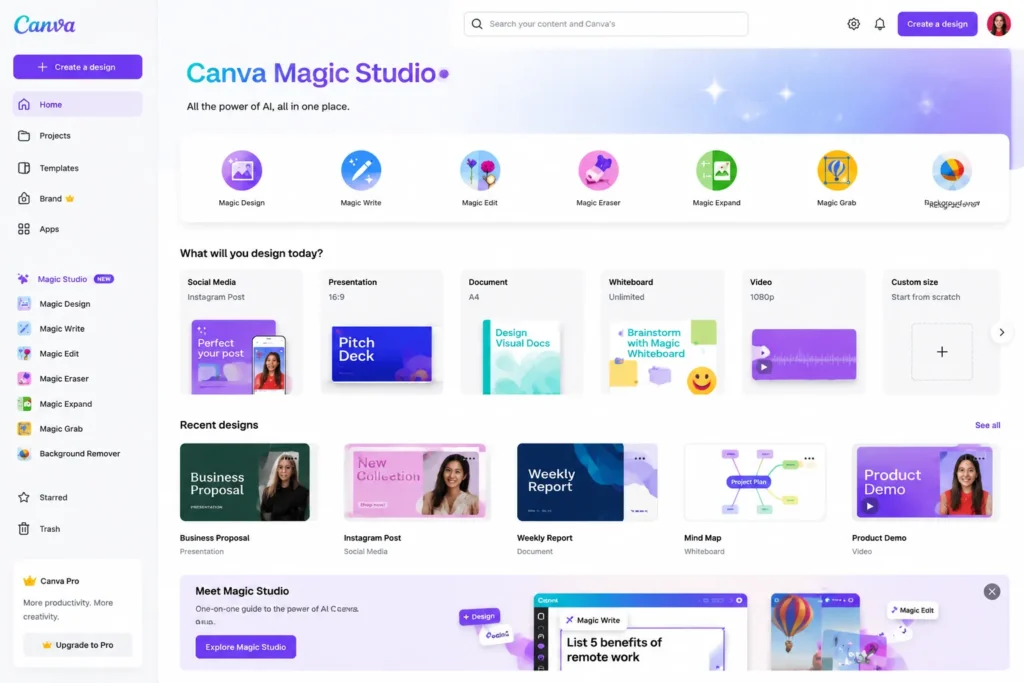
Visual content drives engagement in a digital-first world. Canva Magic Studio enables marketers to create professional-quality visuals rapidly. AI-generated designs match brand colors, tone, and style guidelines, and can be resized or animated for different platforms. Small teams can produce social media graphics, banners, and presentation materials without hiring a dedicated designer. For instance, a small e-commerce company used Canva Magic Studio to produce a month’s worth of social media visuals in a few hours, resulting in 50% higher engagement rates. Marketers can also combine AI-generated copy with visuals for cohesive campaigns.
Pro Tip: Use Magic Studio’s customization features to tweak AI designs, ensuring they remain authentic and on-brand.
Pitfall: Overreliance on AI templates can lead to generic visuals; always add human creativity for differentiation.
Bonus: Agentic AI – Autonomous Marketing Workflows
Beyond these tools, agentic AI is emerging as a transformative technology in 2026. Unlike conventional AI, which requires prompts, agentic AI autonomously detects campaign gaps, triggers optimizations, and generates new strategies without human input. For example, an e-commerce company implemented agentic AI to monitor email campaigns, adjust send times, personalize offers, and test messaging variations automatically, leading to a 15% increase in conversions in the first month. Agentic AI acts as a co-pilot, freeing marketers to focus on strategy, creativity, and high-level decision-making. This technology signals the future of marketing: humans and AI working in tandem, with AI executing operational tasks and humans providing vision and oversight.
Building Your 2026 AI Marketing Stack
To maximize efficiency, marketers must select tools that integrate with their workflow. Begin by mapping your process: research → planning → content → distribution → analytics. Then assign tools accordingly: ChatGPT and Claude for research and strategy; Jasper AI and Surfer SEO for content creation; HubSpot AI and AdCreative.ai for campaign execution; Canva Magic Studio for visuals; and agentic AI for automation. Even small teams can automate up to 80% of workflows for under $200/month by choosing complementary tools wisely. Strategic alignment ensures tools are not just productivity boosters but drivers of measurable business outcomes.
Human-AI Collaboration and Ethics
AI is not a replacement for marketers; it’s a partner. Teams that integrate AI effectively see higher productivity, creativity, and personalization. However, ethical governance is critical. Human oversight is needed to prevent misinformation, maintain brand voice, and avoid unintended consequences. Training, clear approval processes, and monitoring systems ensure AI outputs align with strategy and company values. Ethical use builds trust with audiences and protects brand reputation.
Future Predictions: 2027–2029
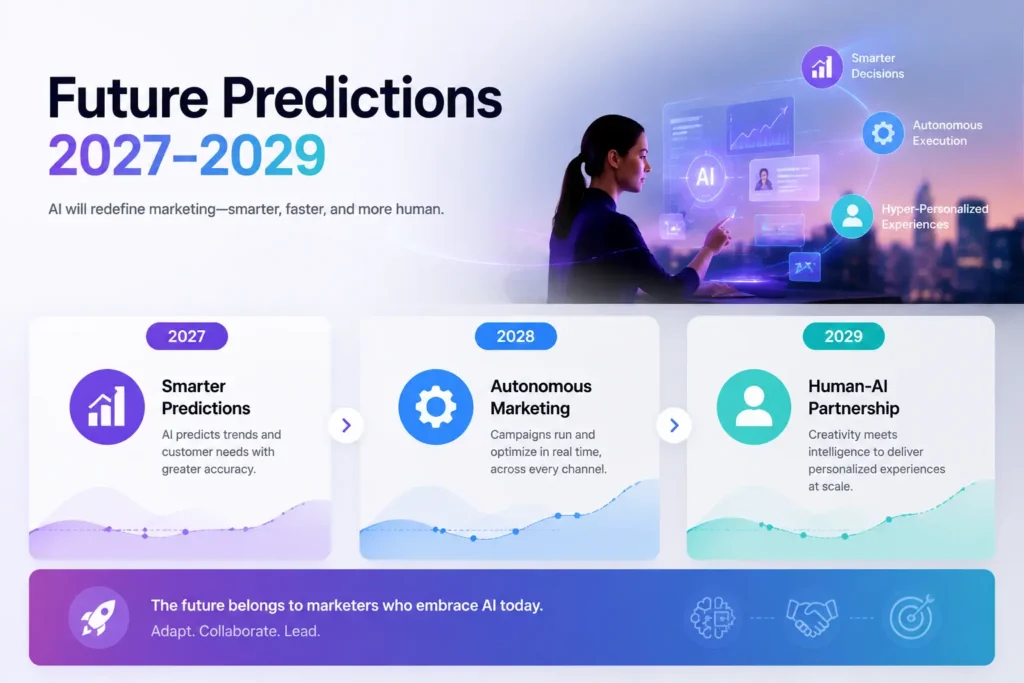
The next three years will see even deeper AI integration. Predictive analytics will become more precise, enabling marketers to anticipate trends before they occur. Campaigns will execute autonomously, adjusting content, channels, and timing in real-time. Unified AI stacks will provide a single view across marketing operations, while human-AI creative partnerships will enable hyper-personalized campaigns at scale. Marketers who adapt to this future will gain competitive advantages that were previously impossible.